

A clinical trial is a research study in which people volunteer to help researchers answer specific health questions. The goal of a clinical trial is to find out if a treatment or other approach is safe and effective.
Clinical trials are an important part of medical research. They have helped lead to many new and effective treatments for prostate cancer.
Clinical trials can study new medicines, combinations of treatments, procedures, or other approaches to care. They may be offered at different stages of prostate cancer.
Who Can Take Part in a Clinical Trial?
Not everyone with prostate cancer is eligible for a clinical trial. Before you can enroll, you will be screened to make sure you meet a trial's requirements. These requirements are called the eligibility criteria.
Screening is important for two reasons. The researchers need to make sure that the trial participants:
- Are well suited for the types of questions the trial will try to answer
- Are healthy enough so the trial will be safe for them
Eligibility requirements may include things such as:
- Your type and stage of prostate cancer
- Previous treatments you have had
- Your overall health
- Results of your blood tests or other medical tests
- Other medicines you are taking
How Does a Clinical Trial Work?
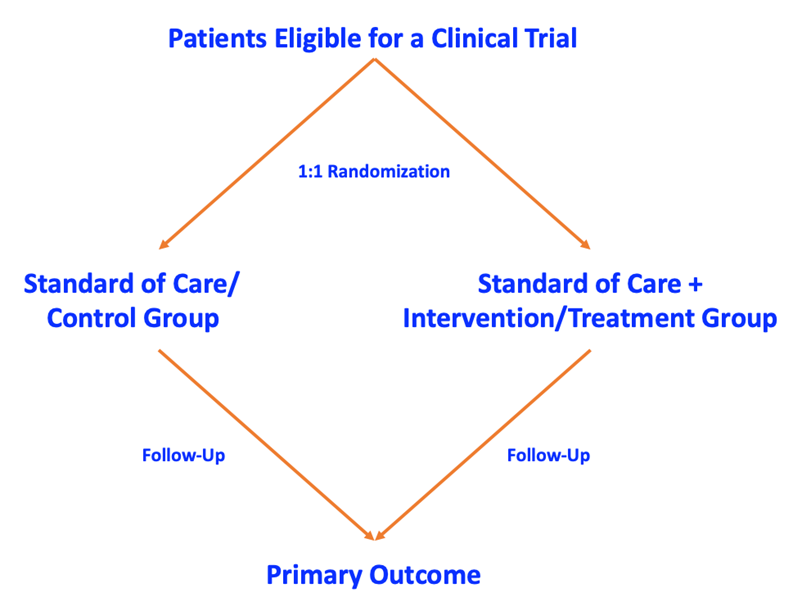
There are many different types of clinical trials. One common type compares a new treatment with the current standard of care. The standard of care is the treatment that is currently considered to be the best available option.
In some trials, people are assigned randomly to one of two groups:
- Treatment group. This group receives the new treatment being studied.
- Control group. This group receives the standard treatment.
This process is called randomization. It helps researchers compare the treatments fairly.
Being in the control group does not necessarily mean that you receive no treatment. In many prostate cancer trials, people in both groups receive effective standard treatment, with the new treatment added to one group.
Everyone in the trial is then followed according to the trial protocol. Researchers compare the results to determine if the new treatment offers a meaningful benefit.
What is a Trial Protocol?
Before a clinical trial begins, researchers develop a detailed plan called a trial protocol. The protocol explains:
- Who can take part in the trial
- Which treatment or approach will be studied
- How much treatment will be given
- When tests and treatments will happen
- Which safety checks will be done
- How long participants will be tracked
- What the researchers hope to learn
Having a detailed protocol helps safeguard the participants being treated in an ethical way, and makes sure the results (data) are analyzed correctly. A trial protocol is a regulatory requirement for any treatment to be approved.
What Is a Primary Outcome?
Before a clinical trial begins, researchers decide what they most want to learn from the study. This is called the primary outcome.
Depending on the trial, the primary outcome might include:
- How long people live
- How long the cancer remains under control
- If the cancer gets worse
- How well a treatment works
- If a treatment is safe
Deciding on the primary outcome before the trial begins helps researchers assess the results objectively.
Is Taking Part in a Clinical Trial Safe?
Clinical trials are carefully designed to protect the people who take part. Doctors and researchers must follow the trial protocol and applicable regulations designed to protect participants. You are also monitored during the trial for side effects and other safety concerns.
Before you join a trial, the research team should explain:
- What the trial involves
- What treatment you may receive
- What tests and appointments will be required
- The possible benefits and risks
- What is known and not yet known about the treatment
You should have an opportunity to ask questions and take time to decide if the trial is right for you.
Do I Have to Join a Clinical Trial?
Taking part in a clinical trial is up to you. You do not have to join a clinical trial just because your doctor recommends it. You can choose not to take part.
If you decide not to take part, your healthcare team will continue to provide the best standard treatment available for your prostate cancer.
If you join a trial and later decide that you no longer want to participate, talk with the trial team about your options.
A Clinical Trial Example: The ARASENS Trial
The ARASENS trial is an example of how a prostate cancer clinical trial can lead to a new treatment option.
The trial included men with metastatic hormone-sensitive prostate cancer (mHSPC). Participants were randomly assigned to receive one of these:
- Standard treatment with androgen deprivation therapy (ADT) and docetaxel
- The same as above, plus the medicine darolutamide
The researchers wanted to find out if adding darolutamide to standard treatment would help men live longer.
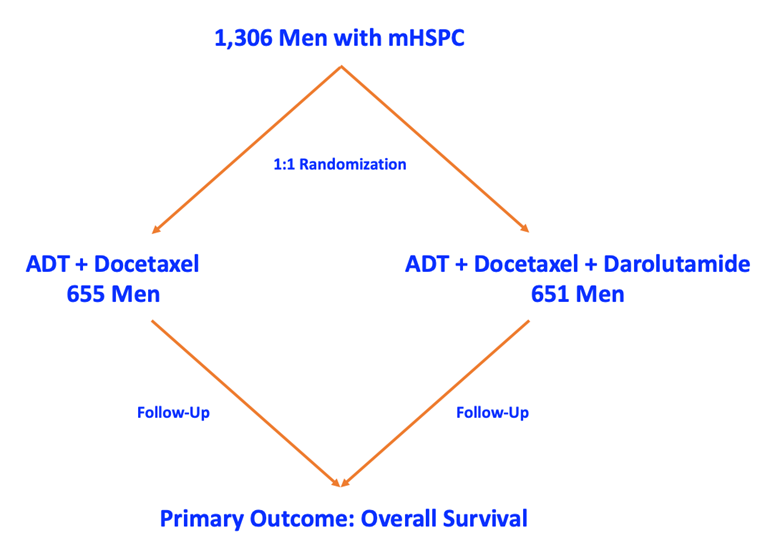
The trial found that men who received darolutamide had a 32% lower risk of dying than those who had standard treatment alone. Based on the results of this, the combination including the new medication was approved by the U.S. Food and Drug Administration (FDA) for men with mHSPC in 2022.
Clinical trials such as ARASENS are possible because people with prostate cancer volunteer to participate. Their participation helps researchers learn which treatments work best and can help improve treatment for future patients.