
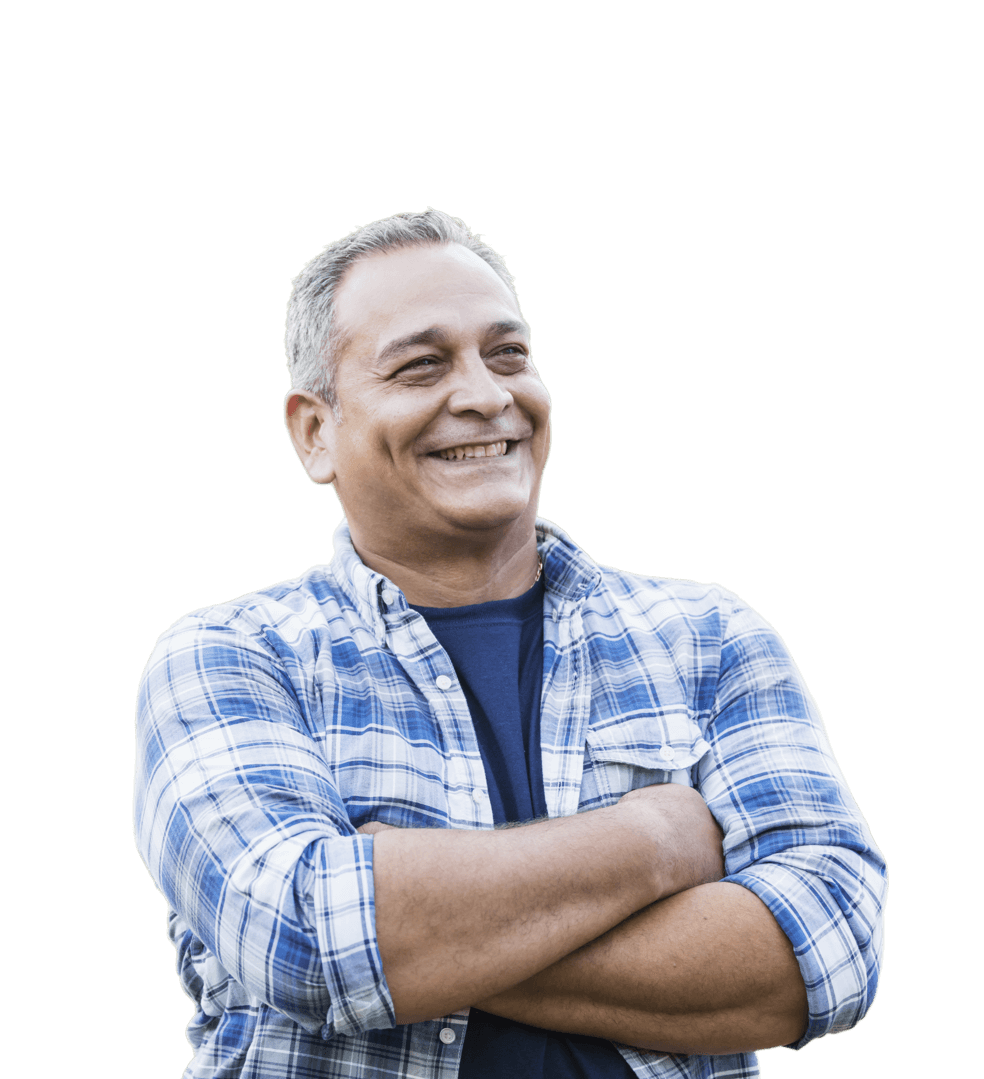
Brian shares how his experience with Stage 4 prostate cancer led him to become a patient advocate focused on advancing precision medicine, using cutting-edge diagnostics and education to help patients make more informed treatment decisions. He also discusses the need for better integration of new technologies, improved patient navigation, and stronger connections between diagnostic innovations and clinical care to improve outcomes for people living with prostate cancer.
Brian McCloskey:
As a patient advocate, I think my engagement over the years has kind of changed as I've gotten deeper and deeper into my journey. And frankly, the stakes have just gotten a lot higher for me as I've continued on my journey. But again, my focus, just given my business background, has really been around understanding my cancer. And what I found going through this process is that we focus too often on treatments as opposed to the diagnostics.
And again, it's hard to personalize a treatment unless you truly understand what the dynamics of the cancer are. And so I'm working with another very talented bioinformatician who has stage 4 prostate cancer and then also another cancer survivor whose background is in management consulting. And we realized that we needed to provide not only myself with cutting-edge research tools and diagnostic tools, but we needed to be able to pair that with treatments.
And so we started this prostate cancer lab to really using me and my other stage 4 prostate cancer survivor as sort of the tip of the spear to figure out, okay, hey, how can we integrate spatial phenotyping or whole exome sequencing or whole genome sequencing plus RNA sequencing into our cancer care in a meaningful way where it will actually help us understand, for example, what's happening with the tumor microenvironment, provide clues on why we have cold cancers, why I have zero tumor infiltrating lymphocytes.
So focusing on diagnostics, we then began to identify companies that could translate some of those diagnostics into treatment decisions. And as I was going through that process myself, I realized that there were other patients that could benefit. And just some people found out about us, and we realized that what was benefiting me and how I was pursuing my cancer journey would benefit other patients.
And so right now we have about seven different patients that are going through this same process of using this marketplace of treatment providers. We also are offering educational services. So every week we have a key opinion leader who comes and speaks to us about everything from pharmacogenomics to neoantigen vaccines, to functional testing and organoids, you name it, spatial phenotyping. We have adaptive therapy. We have some incredible, incredible resources from Stanford to Dana-Farber, Johns Hopkins.
Many different organizations are helping us to educate not only me, but also other patients. It's inspiring because this is a different language. I didn't major in any kind of biology or chemistry, and certainly not genomics. And so this is a new language for me. It's a new language for other patients that we know, but we're seeing that through osmosis, our patients are picking up this language. And it's really, really important because they come away with more education, more knowledge about their disease. They come away with treatment options provided by amazing labs that do incredible work.
And when they go and they have their conversation with their doctor, they can have a much more educated, much more elevated conversation in how to treat their disease. So as a patient advocate, I was not so much focused on the moral support. This is really about solving problems. And I think that this is a carry-on from my career being a marketing executive for many years and working on complex problems. This is just another complex problem. And maybe my emotional support comes through not only my family and friends, but also being a part of solving this problem. It's rewarding, it's inspiring, and I'm hopeful that I can give back in some small way and, along the way, hopefully come through with some breakthroughs in my particular cancer case.
Interviewer :
That is really wonderful. Thank you. Do you have anything else you'd like to add? Any topics you feel like we didn't touch on?
Brian McCloskey:
Boy, that's a good question. So we talked about the role of the patient so important. Getting educated is so important. There is a topic in here, which is how do we increase the speed of translational medicine? There are so many different new technologies out there. They're evolving every day. I mean, I'm learning about them through our weekly seminars. But often the pace of discovery, we'll just keep it with diagnostics, it's not being integrated into treatment.
There's a company that we know of who does spatial phenotyping, and they've supposedly instantiated these machines in one of my healthcare centers. Yet trying to understand or get access to that amazing technology seems like I have to go through a maze of different people to try to connect the dots and use this information or use this technology. So I think that that's part of the frustration as a cancer patient. The pace of translational medicine is just not fast enough. And that means that we have to change elements of our healthcare system.
I'm sort of effectively like a cancer sherpa where I'm trying to connect dots everywhere from between these labs that are doing these amazing diagnostics to getting them integrated into clinical care. Oh, and one other thing too. Pathology and tissue are critical because you can't do most of these diagnostics without tissue. Yes, there's liquid biopsies with blood, et cetera, but tissue is critical.
And so tracing that path all the way from, I guess, pathology to the labs and then all the way through to clinical use requires like a full-time job. And I think that that's what healthcare could really benefit from is having these kinds of patient navigators, care coordinators that are really steeped in all of this technology and can help the patient navigate through this. We need to change that because right now it's really left up to the patient to connect a lot of these dots. Yeah, anyway, we need help. We need help on that front.