

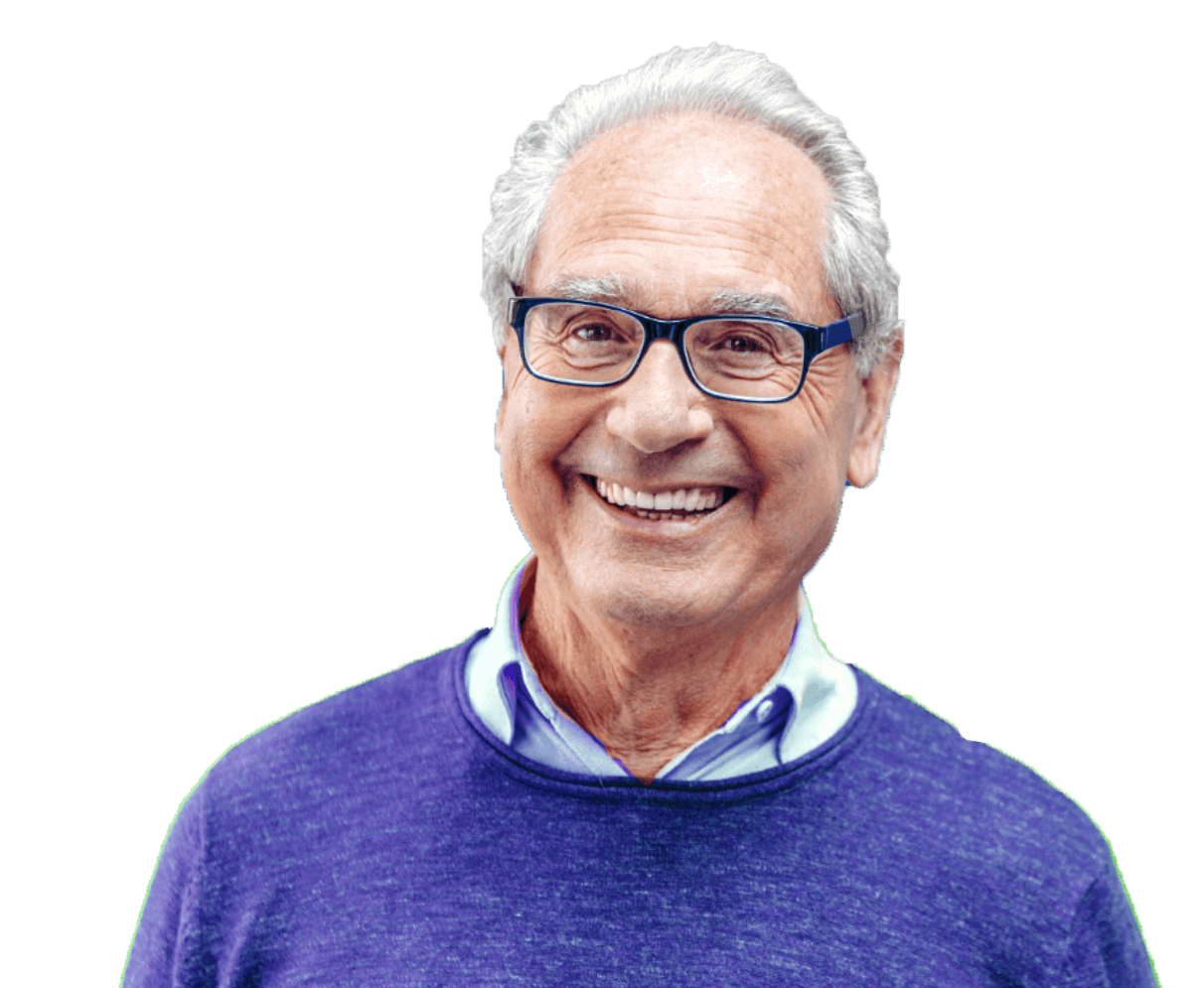
Chuck shares how he remained on active surveillance for many years before choosing aggressive treatment with proton beam radiation and hormone therapy after his prostate cancer spread to nearby lymph nodes. He reflects on making treatment decisions after previously supporting his late husband through prostate cancer, navigating treatment side effects on his own, and encourages men to learn about their options, discuss treatment goals with their care team, and connect with others who understand the prostate cancer journey.
I'm Chuck Kaminski. I'm in the beginnings of my 80th year, which means I've completed 79 years. I live in San Diego, lived here for about 50 years. I'm retired and I'm here at the UCSD Prostate Cancer Summit. I was looking back on my medical MyChart online to see when I may have had a first PSA. And I was with a different medical system before these, so what I found on MyChart was 2014. So I think I started my first consideration of PSA testing probably about when I was 60-ish, 65, because the news and medical things I was reading said, "Men should get tested for prostate cancer."
None in my family. My father, as far as I know, didn't have prostate cancer. He may have had an enlarged prostate, but that generation never talked about health at all, mothers, fathers, grandparents. None of that was ever discussed. So I became aware of not the need, but the option of testing for prostate cancer probably when I was 60. So what is that? About 20 years ago.
And I didn't have much knowledge other than there was something called having a number, and that was about it. How was I diagnosed? So when I changed medical systems, I was in another one, as I said before, and then came over to UCSD. My numbers were still low and not low enough to be unconcerned. Low enough where the doctor, the urologist at UCSD said, "Well, maybe we should do some testing on you."
And I don't remember what the first tests were. I do remember the biopsies. The biopsies came back and I don't remember the numbers, 3 over 3 maybe. And the diagnosis was low risk, watchful waiting, active surveillance. And then we did a couple of, where they take the biopsy and they do some biological test or something on it, and it was the same. It was nothing to be concerned about. And so at that point, I just said, "Okay, let's just keep on going." While all this was happening, my husband who passed away five years ago also had prostate cancer.
And so he treated his with a radical prostatectomy and he told me, "Well, what are you going to do if it rises?" I said, "Well, I hope to die before that." I had a couple of biopsies and the numbers were going up. And at that point it was like, okay, I have to make a decision about something. Here at UCSD, my urologist, of course... I guess he was a urologist, he was the surgeon. He could do the robotic surgery. And I said, "Well, I don't know if I want to do robotic surgery." He says, "Well, I can give you a referral to a radiologist." And I did go and speak to a radiologist. In all honesty, they had no bedside manner. It was, "Okay, here's another body. We can treat you and take care of you." And that pushed me off.
And so I just said, "Well, I'm not going to do anything." Probably in '24, I made a decision because I came to this prostate cancer summit and I saw Dr. McKay who treated my late husband. And I said, "Maybe it's time for me to deal with it." Because my PSA had gone up very high, it was 52. And so that started the discussion with Dr. McKay about, "Okay, so what are my options?" Dr. McKay is fantastic. She worked with my late husband on his treatment and he was very pleased with her, so I was glad that I was able to reconnect with her. And we talked a lot about, "Well, Chuck, you came in high risk. You've survived a long time, more than 14, 16 years without any issues or difficulties." And so I said, "So what are my options?" And we outlined a series of options that mostly focused on radiation and hormone therapy.
I don't know if I was eligible for surgery, I don't think so, and I wasn't eligible for some other treatments because I was beyond that. And so we did the standard test, PSMA, PET, I think we did MRI, we probably did CT. There were two spots in the lymph nodes, so my prostate cancer had metastasized, still within the pelvic area. So she outlined together with me this scenario, "Well, you could do nothing because you've survived this long. We could do this treatment, which involves just radiation or this treatment. And the most aggressive is doing radiation and hormone therapy for two years." So I said, "Well, if I'm going to do this, let's just do the most aggressive treatment." And that's what I've been on for a year and a half. And I could think of a lot of better things that I could be doing for a year and a half than this treatment.
And that was the decision making process that I went through. And not having a support person, a partner, spouse, caregiver, put a lot of pressure on me in terms of how I had to make a decision. There are support groups, but they're not quite the same. If you're in a relationship with someone, they can either just hear you or they can have a conversation with you or do both, so I made the decision on my own. The side effects, we talked a lot about the side effects, muscle loss, fatigue. We didn't really mention night sweats.
We really didn't talk about loss of appetite, lethargy, and those things came upon me as I started the treatment. I started with, I think, Lupron and Zytiga, abiraterone, for a couple of weeks before I did the proton beam. That was the other decision. Do I want to do radiology or do I want to do proton beam? I wound up with proton beam therapy with the thinking that it was a little bit more focused and that overreach of x-ray could hit other organs in my body, whereas proton beam maybe is supposed to be a little bit more concentrated into where it needs to go, which was a whole other experience for however long it was, 12 weeks, 9 weeks of proton beam. The side effects are such that I tell people I feel my age. Before this all started, I didn't feel like I was almost 80.
I felt like I was 60. I had a lot of energy, and that's all gone away. I've gained weight. And so at this point, it's like, I'm going to pursue this for the next six months. The optimism that I have is that hopefully I will... I'd like to be cancer free. That's the target of a two-year regimen, but coming in at high risk, maybe I won't be cancer-free, maybe I will be slightly less, so I'm willing to put up with the side effects. They call it "manopause", nice sweats. I have a lot of sympathy for women who have gone through menopause. They say, "Well, now you know what it's like." The muscle loss, because I have no testosterone, but I also have undetectable PSA right now, so there's that balance and trade off. So I'm managing that in my own particular way. You get targeted with where they're going to shoot the beams.
And I worked with UCSD radiation here, Dr. Rose. And the two lymph nodes had such small spots in it that we discussed, should we do a biopsy? They're so small. Is that going to work? Will we find out anything? Is it prostate cancer? Is it something else? The ultimate analysis was let's just zap them. In radiation as well as in proton beam, there's a spacer that is put in inside of you so that the beams don't affect other organs in the body. That was an interesting experience. One only wants to go through it one time, trust me. I felt I was giving birth the way I had to position my legs straight up. I laugh because the nurses are all there and they're all younger people, saying, "Okay, I'm an old man and this is what they get to look at every day."
So the proton beam was fine, just the initial piece of the spacer and that one little watching your food, but otherwise than that, it was fine. February tomorrow, I have until July. So what is that? About five, six months. I'll have another Lupron shot in May. I'm still on Zytiga during the process because of the night sweats, and they are night sweats. It's really interesting. I don't know why we call it night... I understand why we call it night sweats, but why is it only at night? How come I'm not sweating all the time during the day? They did offer me a pill for that, but at this point I said, no, I don't want any more drugs in my system because the treatment with hormone therapy also has a possible side effect of increasing blood pressure, which it did for me, so I'm taking pills to monitor the blood pressure.
My hope is that the final test will show undetectable PSA, and then I believe I go into maybe every three months I do another blood test and hopefully it won't show any rise. The thinking that I have is maybe I'll be clean, undetectable for a year, two years. And if it starts to rise, then I'll have to have that conversation with Dr. McKay. Every man has an individual journey. Every man has different circumstances than I did and do. I would recommend being as honest with yourself as you can. There's a lot of information out there. You can get into information overload, have good conversations with your doctor, whether it's the urologist or your oncologist, and really talk about all the options that you may have, what may work best for you.
And as they told me as I was going through this, think about the possible side effects and what that might mean for your life. Part of what I'm doing also has erectile dysfunction, so libido goes down. And so you may want to think about that as well as other possibilities like high blood pressure or night sweats, et cetera. But you're not alone, there are lots of men out there who have prostate cancer and are going through their own journeys. So listen, talk, talk to them, et cetera, I'm a great believer in having what I call a ball buddy because they know what they're going through and they understand what you might be going through.