

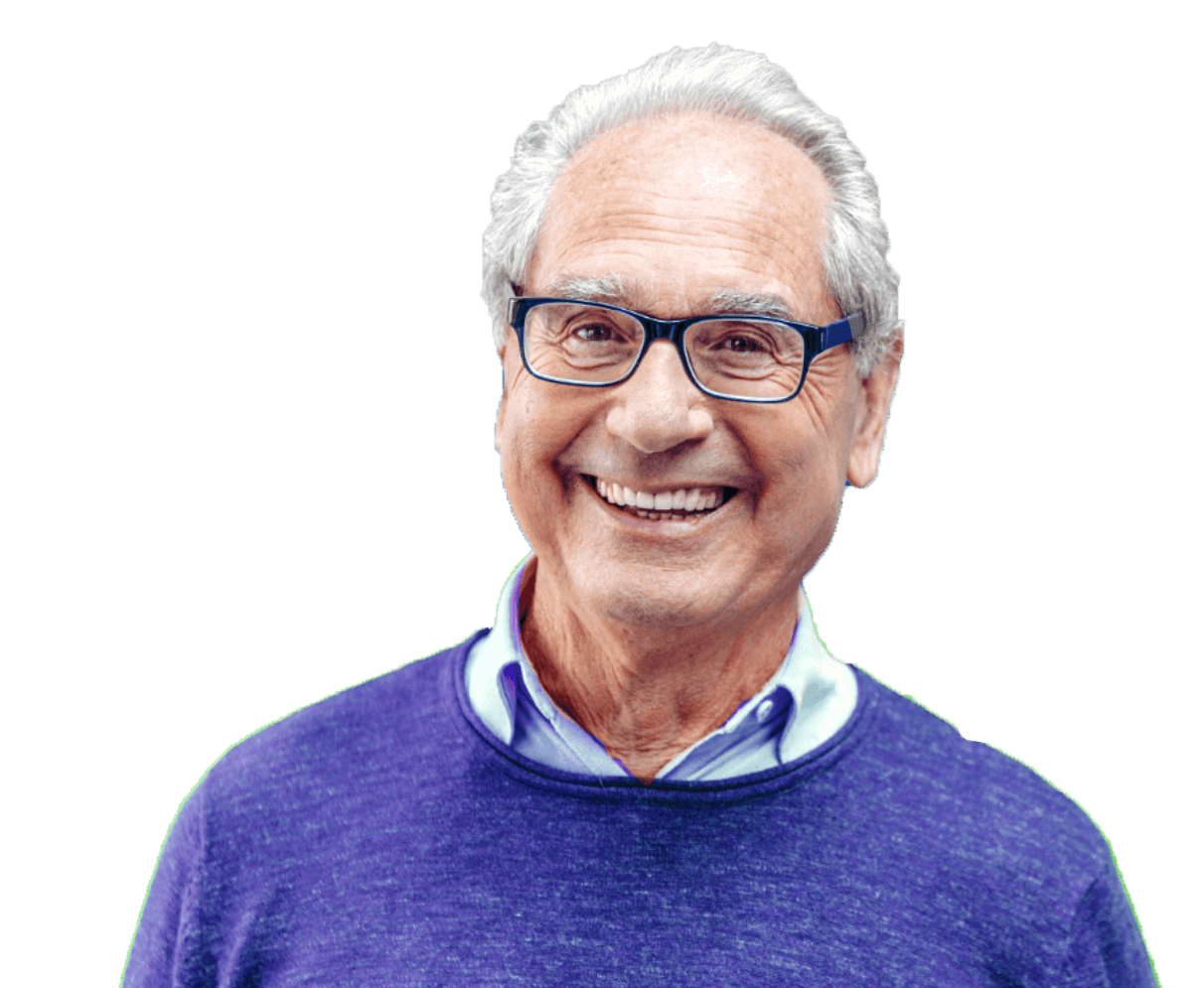
Daniel Mangus shares how his prostate cancer recurred more than 16 years after radiation treatment, eventually transforming into a rare and aggressive small cell carcinoma that required chemotherapy, immunotherapy, and ongoing treatment. He emphasizes the importance of regular PSA screening, staying physically active, relying on a strong support system, and maintaining hope and determination throughout every stage of the prostate cancer journey.
I'm Daniel Mangus. I'm born in California, raised in California, but I've been blessed enough to be all around the world in my job in sports and marketing. I've been retired for over nine years now. Mostly in my journey, I've come a lot of great people. One is the angel that I've been lucky enough to be married to for 41 years. And we have one son and we have a brand new grandson now, just three weeks old. So those are the joys of my life.
Medically speaking, over 20 years ago now, I had a PSA test that went elevated and a Gleason score of seven. So I had some choices to make of what I was going to do. After lots of research and prayer, I decided to go to radiation and I had 41 visits of IMRT, intense modulation radiation therapy.
The radiation was okay on me. It slowed me down a little bit, but not too much. I went back to work pretty quickly and we had good success with that. Without all the tests, reoccurring tests, I showed cancer-free for about 16 years. Always taking my PSA tests and blood tests and annual visits to my primary care physician. So that was always part of the process, which I encourage a lot. That's really the main thing is to stay in touch, getting colonoscopies. I was doing everything I could. And when this came back, I was a little bit shocked of now what?
With that group, we looked at what we could do again, and the oncologist and urologist then thought the best options for me was cryosurgery. And I did two rounds of that over a couple of years. I wish I wouldn't have because it really messed me up on a lot of my sensitivity and control. We started taking Lupron after that and a hormone therapy. So that was a little harder to deal with, but I learned to manage that, the hot flashes, and I didn't want to take any other drugs. I was never a big drug taker, so I learned how to manage that.
That went on for several years on and off of Lupron based on how my PSA and testosterone levels were responding. Last summer, I noticed my body wasn't feeling right. I asked the clinic that I was at at the time what was going on. And they said, "Well, what you're feeling I think is normal." And I said, "No, I don't think it's normal." And I did some traveling and I was really feeling bad. And so I went to the doctor and he said, "Well, I think you have diverticulitis," I think is how you say it. He prescribed me to some antibiotics. I went home that evening and knew that that wasn't what it was.
And the next day I admitted myself into UCSD. My wife and I went in there and they immediately did a lot of tests, x-rays, and also MRIs. And what they found was that I had a mass that was putting pressure on my urethra and also my rectum. I was there for three weeks. And in that three weeks, they did two nephrostomy tubes so my kidneys could drain, put a colostomy bag on me.
So those were big emotional decisions that I had to make. Now that I'm thinking back on it, it saved my life. If I wouldn't have done those, I wouldn't have made it based on what I saw and all the scans and everything I've been through. At the later time of that three weeks, we started chemotherapy. The doctors were very impressed about how good a shape I was in. I'm going to be 77 in April. So my blood pressure and my heart and all my blood work and everything were so good, they said, "Well, we're going to really give it to you hard here. Let's see how you respond."
After that, four rounds ended, we got off of the chemo and went on to a drug called Xtandi, which is four big capsules once a day. And then the immunotherapy shot once every three weeks, and the Lupron continued once every three months.
And I've been doing that now for a while and getting scans every two months. Remarkably, my first scan showed a decrease of over 50% in the mass, so the results were good. The second scan also showed a decrease. And then after I was off the chemo, we showed an uptick in the mass size and a movement. We also found that the reason that things were happening, that it wasn't just prostate cancer, that some cell, one cell decided to break out of the prostate and turn into small cell carcinoma cancer, much like more of a lung cancer, but not. This came out of the prostate, so a very rare cancer that is now moving rapidly and now into my lymph node.
We're back on to prescribing chemotherapy again, which I'm going to start next week to see if we can slow it down again. So it's not a great story, but it's my story. I think fighting it is the best thing I can say. And if I want to give comments to people out there, my first one is, I've already said, get tested, get tested a lot. In retrospect, maybe I should have just got the whole thing taken out in the beginning, but I don't think it was as good then as it is now with the robotic surgery. And so there was that choice. I knew a lot of people that had done it back then and they ended up incontinent and impotent straight out of the gates and I just didn't want that.
That's why I chose radiation, which I think was a good choice. Why did it come back? Who knows? Maybe my lifestyle was not pure and clean enough to keep it away. Maybe my DNA, because I do have some family history, which I recommend checking that out as well, could have been a part of it. Regardless, my story was it came back and I still have it and I don't think it'll ever rid my body. It's just a matter of finding the right combination to fight it and to give me as many years as I can to be here. So whatever I can do to help others or talk them through it, it's a hard emotional decision. It's a spiritual decision. It's a family decision. It's something that everybody needs to really think hard about before they do it. Don't delay, do something and be on a good team.
I believe we're going to win. We're going to have a lot more years and I'm staying healthy. It's allowed me to walk again. I'm doing some three-mile walks. I've done a five-mile walk. I'm playing pickleball. I just played 10 games of pickleball two days ago and pickleball yesterday. So I feel good about that with my age and what I'm going through. Managing the colostomy bag is another thing. It's not as bad as I thought it was going to be.
The nephrostomy tubes were a pain. That was really bad and hard to go through. But once those are removed and my bladder and everything is working again, that's really a good thing. So there's those little steps and little things, little paces you have to make and take to go. So who's ever listening out there and who's ever watching, I say keep a good attitude. Have good partners and people around you. Believe in the Lord and pray a lot. It really helps a lot to give you that comfort and stay on the track.
Having family support is so important. My wife, like I said, is an angel and I'm just so blessed to have her. And then we only have one son and he's right there in all the decisions with us. And he's now a new father and they've got a great little family going, but he's been on a lot of the calls and every decision we've done, he's been right there about it. And then friends, the prayer warriors, the church group, people from around the world I don't even know, I'm on their list. So the family and having the family around you is really important.
If you don't have that, there's so many social groups and other groups that you can reach out to. Don't do it alone. It's harder. It's not good on your body or your heart or your soul. I think so having family around and having family part of it, don't keep them out. Don't think that you're going to be tough and do it by yourself. Having the family and the family council and having them part of it is really good. And they might think that maybe you need to do it a different way. And that's okay. They get an opinion, but it's really your body. You get the final say and they should respect that. And I think most do. In my family, they do. But we come to a mutual decision. Usually we talk through the pros and cons and all the options we have. And we usually come up with, "Okay, here's our next step. What are we going to do next? And let's take that step." So yeah, the family's been an integral part of my journey.
When you first hear about cancer, there's so many horror stories that you're going to die instantly. And that's not the case. I mean, modern medicine is so unbelievable, especially nowadays, and especially with a team like UCSD Medical. And there's many. We're so blessed in the San Diego area and other parts of the country have great teams as well, but we're really blessed here. So I was blessed to have that. And they were encouraging as well. The family was encouraging. My friends were encouraging. You have to keep fighting. I think fighting helps your soul. It helps everything. I mean, I've been big on athletics and sports and sports management and stuff, and that's sort of been my career in marketing and sports. And I see so many that have come from nowhere because of their faith and because of their hard work that have done it.
And so it gave me the faith to do it. And so I knew I had to keep fighting. Every day I get up, I know it's a victory. Every day I'm thankful that I have another day. I know that I'll have more days. I just feel that. And so that's encouraging. My family encourages that as well. So I would just tell everybody, don't think that somebody's going to tell you you got six months and that's it. I wouldn't listen to that stuff. I've heard so many stories of people that get by those questions. I don't know what doctors would ever do that. In fact, if a doctor told me that, I would change doctors because I think that that's the wrong technique. I think that you really need to encourage. I think everybody needs to encourage.
But more importantly, you need to encourage yourself. It's hard to get off the couch or out of bed and go take the walk. I try to take a half mile walk the first thing I do when I get up in the morning every single day, and then I try to do other walks. My wife says motion is lotion. So you've got to keep moving if you want to keep moving. And we practice that. And if somebody can't go with you, do it yourself. If it needs a walker, take the walker. If you need a cane to beat the dogs off, take a cane, but you got to keep moving. And if you do that, and if you try to eat a little better and believe in yourself and have faith, good things will happen.