

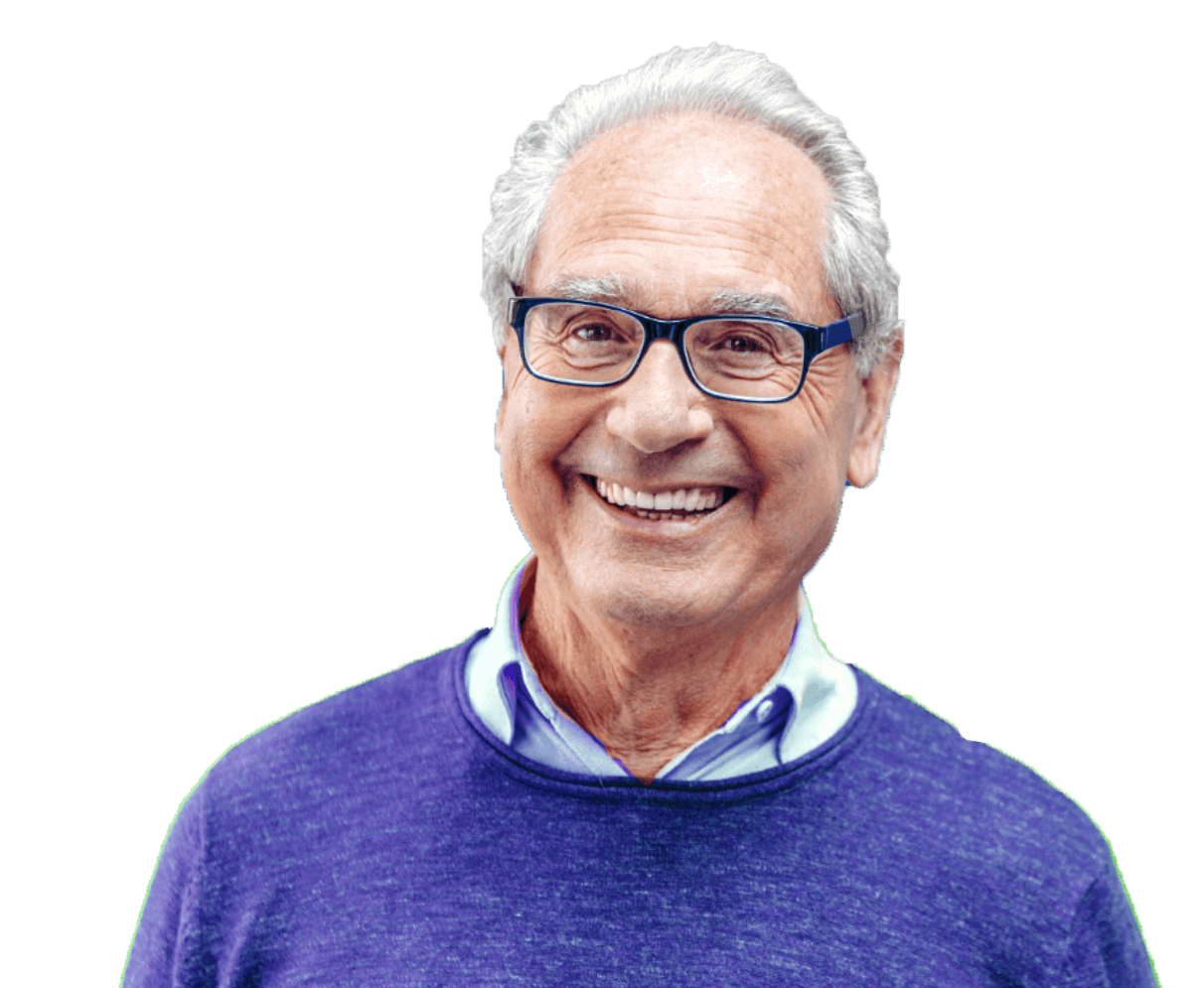
Hugh shares how he has successfully managed his prostate cancer with active surveillance for decades, choosing to avoid treatment side effects while closely monitoring his disease with his care team. Now approaching 90 years old, he reflects on the importance of staying engaged in life, finding support from other men on active surveillance, and making treatment decisions that align with his personal goals and quality of life.
I am Hugh Pates. I am a psychologist. I worked at the University of California for 28 years. I took early retirement because I wanted to have more opportunity to see the world. And while I was at the University of California, I participated in an early study of the development of a anti-prostate cancer drug. And when I participated in the study, my PSA was 0.06 and I wasn't sure whether I was getting the placebo or the drug. At the end of the study, which was about a year in every month I would go in and give some urine and also have my PSA taken and take home these particular drugs, the placebos. And my PSA stayed the same the whole time of that particular study. And that was when I was about 39 years old. So I did nothing about my PSA until much later on.
When I was 62, I did have my PSA taken. And at that time, it was moderately ... It was 1.6, I think it was. And we talked about any possible treatment. I am a Kaiser patient with that time talking to my urologist, said, "Well, let's not do anything unless you want to." And I said, "Well, I'd prefer not to." So I didn't do anything at that time. And so we kept monitoring my PSA at least once a year. And one time I came in, it was up a little bit. It was up in the about the five range and it jumped substantially.
And so they decided to do some biopsies. When I went in to get the biopsy, it was just a young resident that was doing the biopsy. He said, "We looked at your scores here and doesn't seem... Maybe we don't even need to do this." And I said, "Well, as I'm here, I am ready." So they found a small core, very small. He said, "It doesn't look like it's metastatic." And so he said, "We'll give the report and you can go on from there."
So then talking to my urologist, he said, "We have some choices." And he went over various choices with me. And he said, "But," he said, "it's up to you." I said, "Well, I'm going to choose surveillance." He said, "Well, that's your choice. That's your choice. Let's see what happens." I decided that primarily because of the possible side effects of whatever treatment I might choose, whether it be medication or whether it be surgery. And so I just felt that I would prefer not to have the side effects. I'd prefer to stay whole if I could. Now my PSA is at 26, but it has never doubled.
So the urologist said, "Well, if it doesn't double, we still have some choices." He said, "You can start being medicated or you can take some other form of treatment." And I said, "Well, let's just stay with it and see what happens." Now it's up to almost 30, my PSA. So he said, "Do you want to do anything?" And I said, "Well, I don't think so. I think I'll stay with the surveillance." And so at this time, that's what I'm doing.
I'm under surveillance and I have had consultation with a variety of urologists and most of them give the same answer saying, "Well, you most likely will die of something else." And I said, "Can you put that in writing?" And they said, "Not today." So they haven't put it in writing, but I have no side effects that I'm aware of except more frequent urination, but that can come from not only prostate cancer, but from BPH or some other form.
So I feel very content with the treatment I've had. I've just recently had a PMSA and it showed that it's still well within the boundaries of the prostate and it's not growing very much and metastatic. I'm 90 years old next Sunday, so I am going to hang in there and see. I belong to a club called Living to 100. So we are supporting each other and I hope prostate doesn't get me before I turn 100.
So that's my journey so far. Once a month there is a meeting of individuals with cancer up in the Tory Pines area and I go to those almost every month just to be able to, and talk with people who have had treatment, people who are considering treatment. And when I listen to some of the stories about treatments that have gone awry in some ways, I stand up and cheer that I'm following my active surveillance process.
And it's become much more prescribed since I've had it, that more and more men are encouraged to try active surveillance. And so I seem to see that is also a major form of treatment now. And there's a group of men in there that are on active surveillance. And so we will meet after the meeting and talk about what progress or lack of that or what individuals have decided another form of treatment, what benefit that is given to them or not given to them as the case might be.
So it is a check-in group. So I feel very confident about being able to be with a group of men that are doing the same thing I'm doing. Hopefully that you'll have the same outcomes that I've had, which is no pain, no active symptoms that are disturbing my life, being able to remain sexually active, being able to eat almost what I want when I want, being able to have a support group.
I would encourage you to find a group of individuals that maybe have similar circumstances that you do, just to be able to get ongoing information and feel confident about what you're doing. And the thing I believe in is wanting to live. I have had the option of talking to some people who are on active surveillance, but their energy and their orientation towards wanting to live is diminished. They just say, "Well, my game is over." When I said, "Who blew the whistle?"
So I think that having a drive to live and to be able to find enjoyment in life is as good a cure or is as good a treatment as anyone can find. The final word I have is I'll be turning 90 on next Sunday. And I think that what I find about life is being able to find opportunities almost every day to enjoy life, whether it be eating something, whether it be going for a walk, talking to friends, being engaged with a romantic relationship, whatever it is, that's what life is about.