

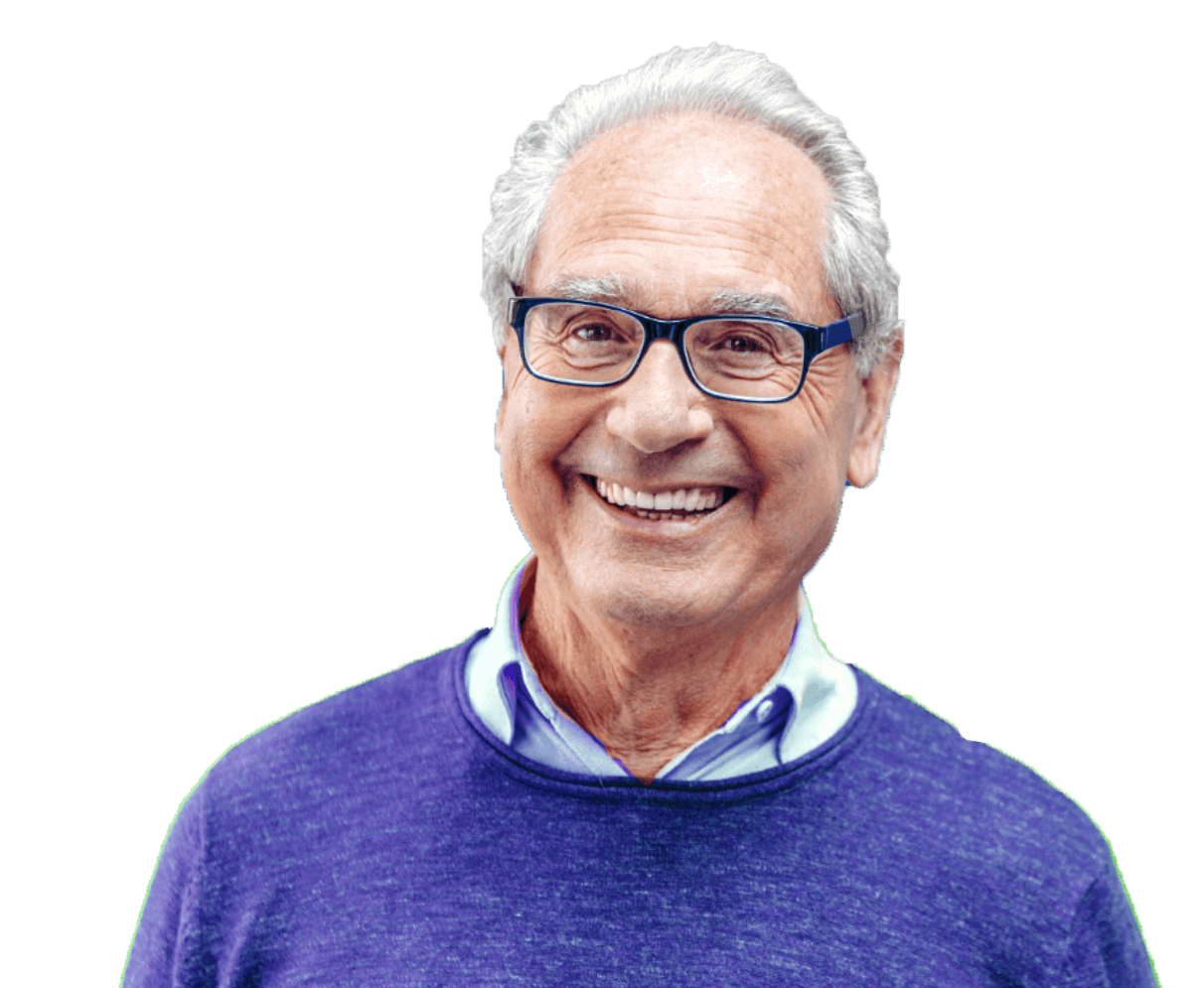
Retired Veteran Major Darnell shares how family history and regular PSA screening helped him catch prostate cancer early. He discusses choosing surgery, coping with the emotional and physical effects of treatment, and leaning on faith and family through recovery. Darnell also explains how his experience inspired his advocacy work to encourage other men - especially African American men and Veterans - to get tested early.
My name is Major Darnell Shaw, retired military veteran. I served with the 82nd Airborne Division. Married to Dr. Robin Shaw. I am from Chesapeake, Virginia. We have a beautiful family. I am currently attending Regent University, pursuing a master's degree in pastoral counseling so that I can help impact the kingdom in my purpose, which is peeling back the onion on prostate cancer and helping men to live healthier as a result of my testimony, and also the initiatives that I'm a part of.
My family history is such that I have four brothers. My oldest brother, James Harrell, was in the Marine Corps and he was stationed down at Camp Lejeune, and he was impacted by some unknown chemicals that allowed him to have some type of rare stomach cancer that then metastasized to his prostate. And so that was back in 1998. And so, at that time, I was 34 years old. He was 44.
He ended up having issues, ended up dying at 46, and suffered from stomach cancer and prostate metastasization. And so that got me focused on getting tested every year after that. So I was well aware of it as a result of my family history and was testing for about 10 years before I had any issues or any other of my family members had issues.
I was diagnosed in 2013, two years after my youngest brother was diagnosed at age 47, and so I received a diagnosis at age 50. And so I had been testing for quite a few years and had a PSA baseline, and that baseline allowed me to stay aware as to what my health issues were. So In 2013, having a baseline and having a PSA that spiked, it allowed me to take immediate action and go get a biopsy.
That biopsy allowed me to identify that I had prostate cancer, and then from there, I went into a spiritual posture to deny having it. But if I had it, then I had a solution that was going to allow me to get rid of it, and that's when I first was alerted in 2013, 2014.
Being a military veteran, I was going to the Department of Veteran Affairs in Salisbury, North Carolina, and I had a very strong urologist team. They were very adamant about ensuring that I made my appointments. And I even had one African-American lady, she was a nurse, and she was a head charge nurse, and she said, "Man, I really appreciate you handling your businesses. I wish we had more Black men like you handling your business, making sure that you're straight."
And so that gave me motivation to want to continue to get the testing done, to stay on top of my appointments, and ensure that I didn't have any issues as a result of having family history, which was my oldest brother that died, and my younger brother had it. And so I'm like, "Okay, I'm going to beat this."
We discussed the treatment options. I didn't think I needed a second opinion. I felt like the biopsy was very clear, with a Gleason score of seven and having a PSA that was not out of the range high. It was five point something, but I was running around two point something, then it jumped to three, then it jumped to close to five, and I was like, "Wow, that's a huge jump, two points." And so I said, "Okay, let me just take care of this." My younger brother opted to have the cancer removed with having the prostate removed, and so that took care of his issues. And so I was like, "If I had a choice, I'd rather live than to have prostate issues." So I had decided to have a radical prostate surgery using robotic surgery to remove the prostate.
So I chose life. And at that time in 2013, '14, I had options. Hampton Proton had some issues out there. It wasn't in my backyard. Seeds were some options that I had. So we discussed a lot of things, and so I said, "I want to go ahead and just get it removed and work on recovery." And my goal was to not have any cancer in my body and my system, and just be free of it, and just continue to live a life.
It was a blow. It was a blow. One, to have lost a brother, my oldest brother at 46, and then my younger brother at 47 received it. And so he ended up having it removed. And so when I got it, I was dumbfounded. I didn't want to talk about it initially. I denied it. I kept looking at it. I did my own research by searching the internet and just trying to figure out what my options would be.
And then I just decided to let my pride go. So I alerted my mother, told her what was going on. I talked to my brothers. And I just kept it within the family, initially. And then I knew that it was going to impact my ability to just have a good quality of life, from a healthy sexual life, and so that was one of the things that I struggled with. The other part was just the quality of life, of having the incontinence issues as a result of that.
And then the mental and emotional. Just think about, "Is my life over? Am I at the end?" Then I thought about it and I really started praying. And so I had a war room in my house upstairs, and I would go into my war room, and I would just open up and talk to God, just sit in silence for about 30 to 35 minutes, sometimes an hour or longer at night, and then just pray about it, and pray about it. Sometimes it turned into weeping, sometimes it turned into just silence, and it was blacked out.
And so having that war room allowed me to just hold onto my faith, and the Holy Spirit told me that I was going to be okay. I just needed to just endure the process, go through the process, you're going to be fine. And my mother's words was, "The best is yet to come," and all I needed to do was just hold out, and hold on to my hope, and allow me to get to the other side of it. And so the family was very instrumental. My younger brother was very instrumental because he had already went through it and so he was able to give me some support. And we would hang out in his man cave and talk about things that were related to it and how his recovery was going, so I was able to glean insight from him and also to use that as fuel to keep me in the fight.
At the time, I wasn't married. 2005, I had a separation and divorce, and so I was single at the time, about 10 plus years. So I was dating, but the partner of mine was not as supportive as I wanted to be, and so the relationship ended up falling apart as a result of having prostate cancer and just working through some of that.
But God allowed me to get married again after prostate cancer, so now I am married. I'm five years in with my beautiful wife, Dr. Robin Shaw, and she has really helped me out. She's a clinical psychologist, so she's really been instrumental in allowing me to be able to process and talk about the mental, emotional side of everything, and then being able to come alongside me in this journey and help me walk through it.
Now, the recovery, I suffered with erectile dysfunction, and then I had to figure out how to get over that. And so one of the things that I did in my journey, I had to go back to my surgeon and talk to him about it, and he gave me some advice, and he told me about the implant, and so I decided to take advantage of that. So I have a Boston Scientific implant that he installed about two and a half years after the prostate surgery, and it works effectively, 95% satisfaction rate
And so, after that, started dating a little bit and started getting back into the game. Confidence became more high. I felt like myself again, but I still had some issues, urinary incontinence and some things like that. Had to work through all of that. And so after working through all of that, started dating again. And fast-forward, I met Dr. Robin, and we decided to enter into a relationship. And I am married and we're in a successful relationship. We have great chemistry and everything's going well.
I am very lucky I caught my prostate cancer early. I don't have any hormone issues, I don't have any treatment of that nature. I get an annual. I was doing every six months, and then I went to annually. So every year, I get an annual PSA. My PSA is less than zero, 0.07. I stay up on that. I look forward to that anytime I give blood. "It's PSA, right?" "Yep, PSA. Right." And so I use that as fuel to stay in the game and to be aware of my status. I feel good once I know I don't have any more issues with prostate.
On my shirt, I have two logos. I have one logo that says Just Go. Just Go is a foundation that I founded, Just Go Wellness Solutions 24-7, which is to illuminate wellness globally. That's my vision. And my mission was to focus on one thing at a time, so prostate cancer was one of the things that was personal to me. I have four brothers, lost one of my brothers, so three of the four of us are now living, and all other three are healthy, they're prostate cancer free, but we all have different journeys.
And so I wanted to capture this to help save not only the African-American race, but humanity, men in general, no matter what color. And so what I have on the right side is a Hope Blitz, and the Hope Blitz is about prostate cancer awareness and education. And so one of the things that I utilized was my story and my family's story to be able to show the importance of men getting tested early, early diagnosis, and prostate education, and allowing men to know what a prostate is, where it's located first of all, and what functions it has as a part of the reproduction system.
If you look at my logo on my shirt, you see Prostate Cancer Hope Blitz, which is all about education and awareness. And so the knots on the rope represent the tug of war. In life, we have a tug of war in things that we're going through. And so I utilize this rope as a line that you throw to another man and the other man grabs the rope. And if he grabs the rope and you're trying to help him to get through whatever it is, the knot represents a place where he can rest, recover, or just hold on while somebody else can pull him through the journey. And so I have eight knots that's tied to biblical themes, from walking by faith, not by sight is the first knot. The second knot is I can do all things Christ, who strengthens me, right? As you keep going, there's other themes that are related to that. So it represents growth, right?
And then the last one is stand still and see the salvation of the Lord as he works it out in your life. And so if you use this analogy on this Hope Blitz, if you grab a rope, and you get tired, and your hands starts to slip, you hit that knot, all you got to do is just hold on while somebody else on the other side pulls, keeps you steady, you readjust your hands, and then you can keep going, keep going until you can get to the end of your journey.
So the question is, who's in your life that's allowing you to have hope? And if you are already through it, then you can be someone else's hope. And so this hope journey is about helping others process emotions, and the greatest emotion that we can have is love and loving them through whatever difficulties they're going through. So my Hope Blitz and my hope logo is about throwing that.
And when I met my wife, Dr. Robin, she said, "I thought you was writing a book." I said, "I am." She said, "Well, you need to get up off that and write that book." She said, "When you write your book, I'm going to write mine." I said, "Let me get out the way." So I got out the way, wrote my book, and I wanted to make it a nice, interactive book that told a story, gave men some tools, some questions and some answers, and to be able to talk about the things that men wanted to know. So I wrote this book, Peeling Back the Onion on Prostate Cancer. And so with the name of the title is, if you think about an onion, onion have various layers. And so when you look at peeling back the onion, you want to get to the inner layer to try to figure out what the root cause of what's going on in your life.
So in life you have... I've used seven layers to talk about this. First, what is a prostate? And then after we get into what is a prostate, we talk about the next layer, the diagnosis, the mental and emotional struggles. I utilize the love languages as another layer to be able to talk about how your love life is impacted. Quality time, words of affirmation, acts of service, physical touch, and gifts. And being able to know during this process, going through prostate cancer, things going to have to change. And so one of the things that I point out in the book, I like to talk about it as a family. So I say, "Let's go, family. This is what you need to know."
And doing that, I point out those things that are really key, like a prostate is located here. Without the prostate, you can no longer produce children. And so the prostate is connected to the glands, the seminal glands and things of that nature. So I share that story, right? Then I get into the diagnosis, the symptoms and so forth. I get into mental and emotional struggles. Then I get into the aftercare.
And then the other thing I have in the back is the prostate health cards. The prostate health cards in the back of the book were created during the COVID-19, and it was an opportunity to semi-mimic the COVID card, where you could carry around a card that has your data, your status, your trends, and so forth. So what happens when men go to the doctor? They get a PSA or some type of test. What they do, they take their records, they put them away if they do that, or they leave them in a doctor's office and then they leave out, and then they just have a verbal report or whatever, and that's it.
And so what I wanted to do for men, because prostate cancer is so much of an issue in the African-American community and all other races, that we needed to have a place where we could record it and put it in your wallet. So the prostate health card was like a wallet-type card that had the digital rectal exam on the left, and it had the date, the time, your initial baseline, and also places that you could write your comments. One of the things that we don't have a good record of is family history. If we know our family history in advance, that would allow you to be proactive in getting the test done, so that's a part of the card. The right side has a prostate-specific antigen test, and it has a place for you to put that data and be able to know what those numbers are as well.
So those are tools that's in the book that will allow men to get tested and they can recall that. And so my goal was to have men have a baseline. Everyone needs to have a baseline before you have anything going on, so where you're at, so you can go back and know what your history and your status is.
So men's pride was one of the things that I had to die to. So I had to die to self to be transparent and tell this story. I had to utilize my story as fuel and to be able to put the numbers and the statistics that say that African-American men are 37% more likely to get prostate cancer than the other races. On an average, all men, it's 19 out of 100,000. African-Americans, 37 out of 100,000. And so that was very critical to me. I wanted to use my brother's story as a Marine and how he was affected in 1988 and died at 2000 as a dedication to him and to my mother to be able to save someone, one person at a time, so I dedicated the book to that.
To African-American men and all men, no matter what race, cancer does not discriminate. Cancer is cancer, and there are different forms of cancer. I want you to just go, Just Go, go and get your health taken care of. Health is wealth. Without health, you have no wealth. You're going to spend your money on something. If you get your health straight, you're going to have a long life, you're going to have a beautiful family, you're going to have the ability to just do things that are amazing. And so just go 24/7 is what it's all about.
Let's go, family. Let's go.
This video was produced with the generous support of AstraZeneca Pharmaceuticals