

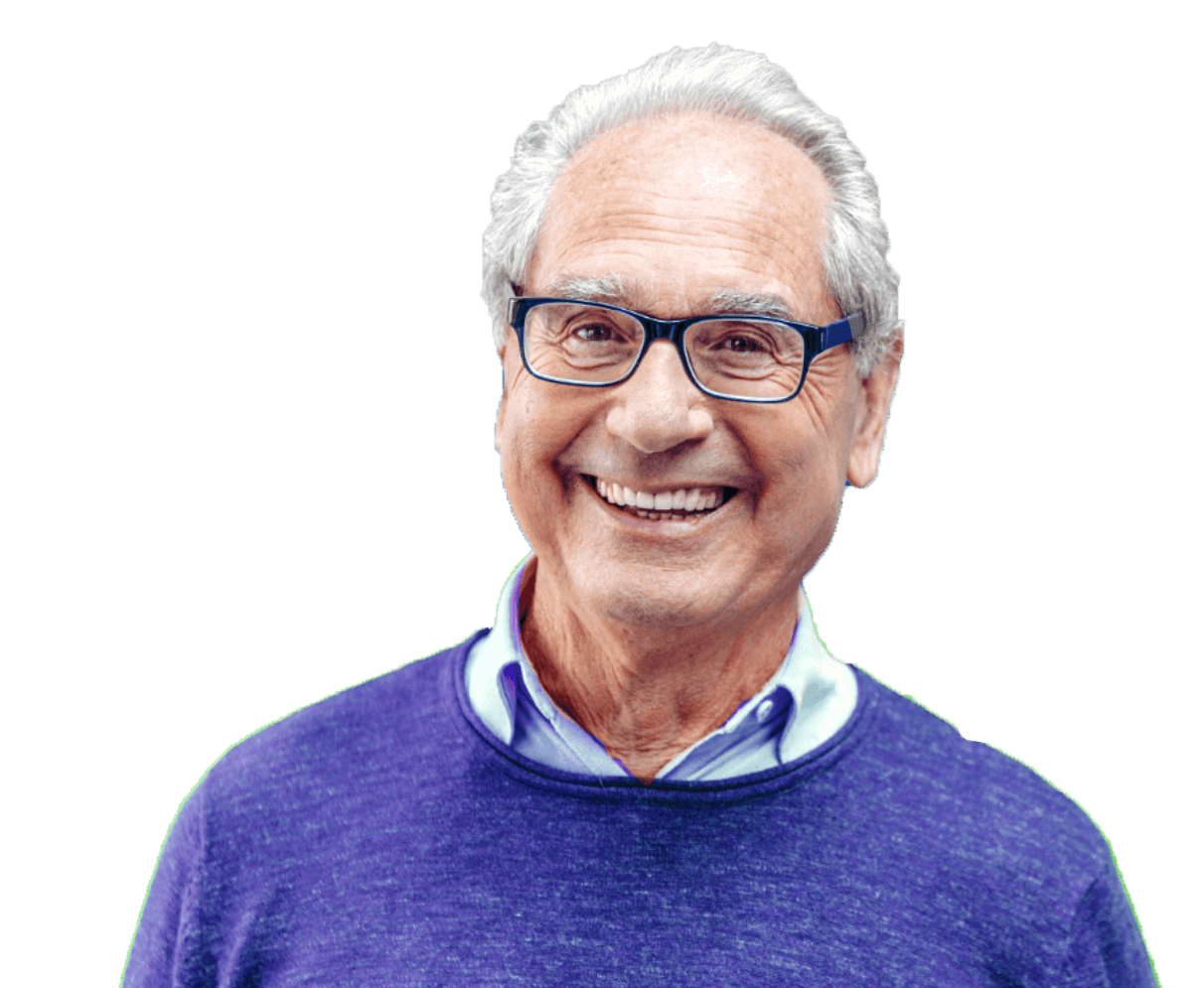
After an elevated PSA led to further testing, Sonny was diagnosed with intermediate-risk prostate cancer and underwent radiation therapy combined with hormone therapy under the care of Dr. Zach Klaassen. He discusses the challenges of treatment, including managing side effects, and how support from his family and care team helped him navigate the process. Sonny also shares why he believes regular medical care, PSA screening, and early detection are so important.
Dr. Zach Klaassen:
Hi, my name is Zach Klaassen. I'm a urological oncologist here at the Georgia Cancer Center in Augusta, Georgia. I'm delighted to be joined for the Prostate Cancer Foundation Patient Voices discussion with one of my patients, Mr. Sonny Gay. Mr. Gay, thanks very much for joining us. Please introduce yourself to our wide audience on the Prostate Cancer Foundation.
Sonny Gay:
Well, it's good to be here. Glad I can be here. My name is Sonny Gay. For everybody that knows me, my official name is Arthur Judson Gay Jr. I was a banker here in town for about 40 years. We sold the bank and then I went into the real estate development business and spent 10 years doing that, and I really enjoyed that.
Once we sold out of all of that, then I've basically been bumming around playing golf and looking for something to do, and that's become less and less each week.
Dr. Zach Klaassen:
This is fantastic because the patients really want to hear your experience and we're going to walk through that today. And just to start off, when you came to see me, elevated PSA, we talked about biopsies. What was that conversation like? I know your son was with you at that point. How did that conversation go and what did you guys talk about after that?
Sonny Gay:
Well, leading up to that, I had been... Me and my primary doctor had been watching the PSA for almost a year, and it was hanging around the go, no-go zone for almost a year, and then all of a sudden it took a blip and he told me, he said, "You need to see somebody." Then I talked to Dr. Klein at church. He said, "I know exactly who you need to see." He got me in with you. We explained what had happened and how it had progressively gotten worse. And then I think when I explained to you about, I also had been through chemo treatment with CLL, but it had been in remission for about eight years.
My white blood count has been active here recently. It concerns me a little bit, but it is what it is. And so I thought the way that you handle the treatment with a PET scan and those different other tools that we could drill this down to that it was to prostate was my concern.
Dr. Zach Klaassen:
Yeah, absolutely.
Sonny Gay:
Because I didn't know that it didn't have cancer all over. I mean, because as you well know, CLL is not curable. But I've been very fortunate. Eight years is a long time.
Dr. Zach Klaassen:
That's a long time. I think just for our listeners' context, we got an MRI because that was part of our workup for the elevated PSA. We did see some enlarged lymph nodes in the pelvis, which had us concerned. So we did the biopsy. This came back as intermediate risk prostate cancer. We got the PET scan just to make sure that those lymph nodes we were talking about didn't light up on the PET. So we kind of, between you and I and your oncologist, we basically said that's probably old sort of in remission CLL lymph nodes.
So we kind of embarked on this treatment plan for intermediate risk prostate cancer, which obviously is a lot different than if we're thinking that it's lymph node positive. So let's fast-forward to that discussion. I know you always bring your son and he's a support system for you. When we talked about options and given our goals and age and everything else, we settled on radiotherapy and hormone therapy. Maybe just take our listeners through what that discussion was with myself and then with your family afterwards.
Sonny Gay:
Yeah. Well, I think that knowing nothing about this other than what other people have told you, which is sometimes good and sometimes not. My first thought was are we going to remove it? We didn't want to go that route. We didn't want to take that risk and didn't know that it was going to be any better than the treatment as far as the outcome, because I am 78, be 79 in March, but I want to remind everybody, my father will be 104 in April.
Dr. Zach Klaassen:
That's right. We're trying to get you a little-
Sonny Gay:
So I have a goal that's probably not attainable, but that's okay.
Dr. Zach Klaassen:
We're going to try to get you there.
Sonny Gay:
That's right. I think all of that was very good because being my age, I bet I know 30 or 40 people that's been treated for prostate cancer. The only part that was in there that I had never heard of and none of my friends had ever had was the hormone treatment. And that was a little iffy for me. I mean, I know 40 people have been treated and they got okay without it. I want to take this step. Well, your consultation, my studied in reading and then Dr. Howington, the radiologist, he wouldn't even hear about not doing it.
And so I said, well, if he's that sold on it, then they see this on a more daily appointments rather than me over a period of years of talking to people. And we decided to do that. The shot, quite frankly, didn't bother me taking the shot, and I didn't have any repercussions from the shot that I know of. Of course, now, that was the first thing that I had. And obviously, I mean, I'm assuming it takes a while to bleed out and get into you and get you going.
And so the shot didn't bother me, but then I was lucky enough to get that pill, and the side effects of it are different. My experience was different. I don't know whether the side effects probably the same to you, the truth, but my reaction to that pill was a little more violent. Weight gain. I mean, I tell everybody all the time, I was young one time, but I was never small. And I've always been trying to fight weight. And in the last 10 years I've been fighting it even harder because it was just naturally harder to take off, but I just couldn't. It just kept piling on me.
And then the loss of your testosterone and the side effects of that are very apparent. But I tried to look at it from the point of view, well, if those side effects are so apparent that it must be doing what they want it to do. And even though that's not what I want to happen, what I really want to happen is hopefully being as direct as the side effects.
And they're not unmanageable. They're just hot flashes at night. But all of that was a good experience as far as having to do it, and I don't have any desire to change anything. As my last appointment with you, my PSA was negative 0.03, which is a long ways from 14.
Dr. Zach Klaassen:
That's right.
Sonny Gay:
And I'm just hoping it'll stay there.
Dr. Zach Klaassen:
Yeah, absolutely. That's a great summary of your treatment course. Just digging into some of the support system. As you're going through the biopsy, as you're going through the PET scan, the radiation, the side effects of the hormone therapy, and we've talked about your six months out. Hopefully those will continue to dissipate as we get further away. Just talk about Todd and your family and the church you've mentioned as well. What's the support system been like getting through all this treatment?
Sonny Gay:
Well, Todd came with me as he's been to every CLL appointment I've had since 2015. Matter of fact, he changed jobs during that time, and he told the new employer, which happens to be y'all, that he had to have off on my appointments for doctor's appointments for my cancer with Dr. Brian. And they said, no problem. So he's there every time.
My church family, I've been going to church regularly, and I mean regularly, three times a week, four times a week. This week will be five with the different appointments and meetings. And we've got about 350, 400 attending members. And out of those, I'm in the second age group, so I know a lot of people with prostate cancer. I know even more with cancer. So we have a lot of stories to tell.
Dr. Zach Klaassen:
I think you've summarized the experience so well. I'd love for you, you've got a huge audience of prostate cancer patients and their caregivers that'll be listening to this. What would your message be to them, whether they're going through active surveillance, whether they're going through surgery, radiation, metastatic disease, what would your message be as a prostate cancer survivor yourself to the people that are listening to this?
Sonny Gay:
Well, I think the most important part of it, I grew up in a family that we truck farmed. We raised our own beef, our pork and our chickens. And we didn't have a whole lot extra, but we ate well. We had a good family. We had a wonderful family life.
But we always went to the doctor. If daddy had to take on a side job to get us a doctor appointment, he did it. And I think that's the secret I would tell most people.
Dr. Zach Klaassen:
It's a great message. I think your very heartfelt message about getting to the doctor PSA screening, early detection, is exactly what these conversations are about. You and I have become good friends, and I appreciate you doing this for the Prostate Cancer Foundation, and it's going to help many men and their families out there that are listening to this. So thank you very much, Mr. Gay.
Sonny Gay:
Good luck to each of you.
Dr. Zach Klaassen:
Thank you.
Sonny Gay:
Yep.
This interview was produced with the generous support of Pfizer