

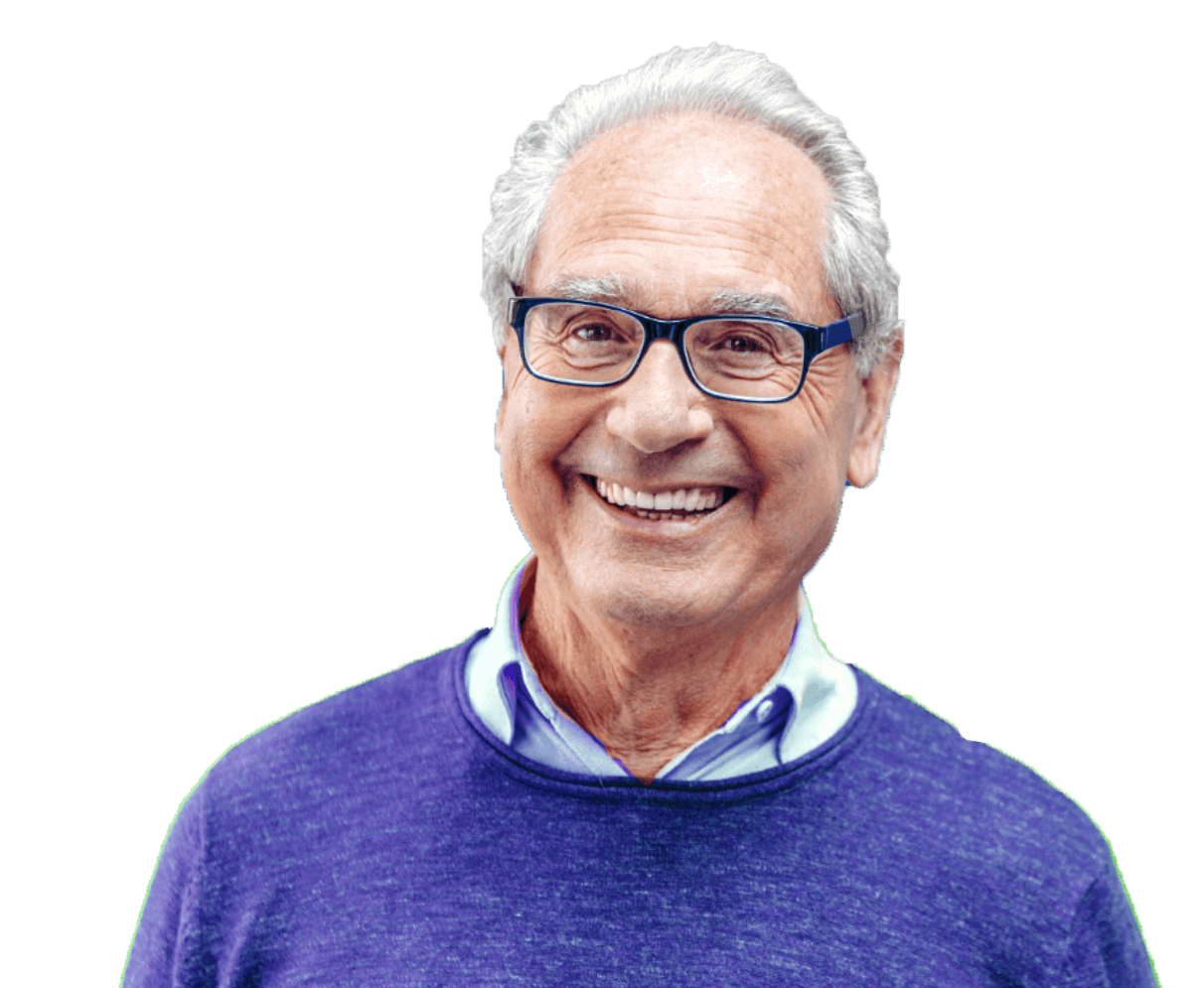
After experiencing urinary symptoms and advocating for a PSA test, Felipe was diagnosed with Stage 4A prostate cancer at age 54. He shares how self-advocacy, early detection, family support, and informed treatment decisions shaped his journey. Drawing from his own experience, Felipe encourages Hispanic men to prioritize their health, speak openly about symptoms, ask questions, and take an active role in their care.
My name is Felipe Gutierrez. At the time of my diagnosis, I was 54. I am currently 58 years old. I was medically retired in December of 2023, working as an advanced practice nurse/nurse scientist. I currently have been married for about 29 years and we have two pups, and one's a Cockapoo and the other one is a Golden Doodle. I was diagnosed with COVID in December of 2020 and that's one of the reasons I was medically retired as well, and then diagnosed with long COVID in December of 2021.
I began experiencing urinary symptoms, and by that I mean frequency and urgency, sometimes difficulty starting the urination, in March of 2022. I did go and see a physician and they did a urinalysis on me, which was negative, so then they decided to go ahead and send me to see a urologist. I did see a urologist in September, I want to say September of that same year of 2022, and the urologist told me that I had a large prostate and she did a digital rectal exam. I showed an enlarged prostate, so she started me on a medication called Flomax.
And prior to me leaving the office, I knew that I wasn't of the age yet to get a PSA. At that time it was 55, I was 54, but I did ask for a PSA, and she agreed with me. After learning that my PSA was elevated ... it was 11 initially with that first PSA in October of 2022 ... then I decided that afterwards I was going to go to another urologist, who I actually worked with.
So I went ahead and called a friend of mine who I used to work with, and she gave me the name of a urologist who I knew and her number, and I called her. She did another PSA, and that was 15 when I saw her the second time, and so she ordered an MRI which showed a prostate cancer within the prostate only. And so she said, "Let's go ahead and do a biopsy of the prostate," and so in November of '22, I did get a biopsy, and that showed a Gleason of 4+5, which equaled to 9, so that was on a 10 scale.
And so I learned that that day in November, that I did have an aggressive form of cancer, and at the time I only knew that it was in my prostate. When they did the PSMA, it lit up, meaning that the scan lit up to show that I had not only cancer cells in the prostate, but they found them in the lymph nodes, in the nerves, and also in the seminal vesicles.
I had a discussion with my urologist first, who shared the results with me. And due to the scan and due to the last scan, the PSMA scan, basically she said that because of that, I was not able to ... I didn't qualify for surgery at the time.
And so I opted for Lupron initially, and so I started that in January of '23 through December. I did stop in December only because I was having a lot of side effects with that, which included increased fatigue, very, very ... lots of fatigue, and so I couldn't take it anymore, and so I stopped that. And then I also additionally did ADT, which is androgen deprivation therapy, and that medication was called abiraterone.
I knew from reading also that another option then would be, in addition to those two, would be radiation. In addition to radiation, also with the abiraterone, you need a medication. It's a steroid, and so I had to get put on a steroid as well, which also can cause fatigue. The radiation I started in March of 2023, so after I had started the Lupron, then I went and did the radiation. Then after the radiation, I did the abiraterone and the steroids.
Early side effects early on in the treatment were cystitis, which is an inflammation of my bladder. Also erectile dysfunction, fatigue, as I talked about earlier, and hot flashes. I forgot to mention hot flashes. Those are really bad. So make sure you have a fan, you buy a fan, you carry it around with you everywhere you go.
And then the late ones were incontinence, leaking, bleeding out of both my urethra and also my rectum. And I had to go and get what we call treatment at one of the local hospitals. It's called hyperbaric therapy and that helped to decrease the bleeding, and also now it's gone. I don't have bleeding anymore. Cataracts is another one that I had. GERD, pain, lots of pain, especially in my abdominal area where they did the radiation and from the cystitis. Cystitis is pretty painful as well. Gynecomastia, I still have that issue and that's something that I'm hoping will go away eventually, or maybe I can go get help with that. Weight gain, especially a fatty liver, and then osteopenia, which I'm being treated for, and then adrenal insufficiency.
If you have prostate cancer, the prognosis is usually better than any other cancer that you could have, and so that was good. So in my mind, I was like, "Okay, that's good." But knowing what I know with, number one, comorbidities ... so comorbidities, my example would be long COVID ... not knowing how that was going to affect my cancer. And then along the way, I was getting all of these side effects and I was getting all these new diagnoses, like the adrenal insufficiency and the osteoporosis.
So that was frightening to me, because here I have Stage 4 cancer, and yes, the prognosis is better than any of the other cancers, but I also have long COVID, and now I'm getting all of these other new diagnoses. It's just very, very unknown, very, very scary, and sometimes it sucks to know too much. So as a healthcare professional, not so good.
I had, or have, an incredible support system of friends, family who love me, I know, because they've rallied around me. I'm blessed to have friends who are nurses. If you don't have any friends who are nurses, go get them, because they're the best. They want to help you. They want to come around and make sure you're okay. They want to take you to your appointments. They want to know what's going on. And so sometimes for some people that's good, and for me, it's wonderful.
And my family, being Hispanic, they just want to make sure I'm well and they want to come and take care of me, and they did. And my family's out of state, and they traveled here to come and stay with me when I was doing radiation and other times when I just wasn't feeling well. And I have a spouse, like I said earlier, 29 years, who has been amazing. And so family, friends, anybody that you know.
Don't be afraid to tell people you have cancer, because I know some people don't want to say anything because they don't want to be bothersome. They don't want to bother other people. They don't want other people to know what's going on with them. But my advice is let them know, because they're going to be there to help you and to take care of you.
Typically, men that are Hispanics, they don't necessarily talk a lot about their ailments as much as women do. I do remember growing up, and all the women would sit around and they would talk about each other's ailments and what was going on, and when they went to the doctor and what the doctor found and what the doctor told them. They'd give each other advice, and men just didn't do that. Men, you did other things, like go out and play sports or just sit around and talk or watch TV or whatever, but you didn't really talk about yourself. You didn't want to talk about your illness, so you didn't really know what was going on with your family, with your friends.
And they typically don't go to the doctor as much as women did, and it could change. It could be different now, but when I was growing up, that was the case, and definitely didn't want to get a rectal exam and definitely didn't want to get a colonoscopy. So that's something that I would definitely make sure that men aren't afraid to do, because that definitely will either save your life or they could find something earlier if you go to the doctor.
The other thing is I never grew up knowing what ailed the men in my family, and it wasn't until I had the diagnosis that I actually started to ask and started to learn, and started to learn too that my brothers had the same symptoms I did. And I encouraged them to go to the doctor and, "Hey, make sure you get a PSA. Make sure you talk to your doctor about what's going on with you." So I think knowledge is power.
I believe it may have saved my cancer from spreading to my bones and my organs, being my own advocate and having that knowledge that I had. So my suggestion is if you're not a healthcare professional and you know someone who is, and you go to the doctor and they tell you something, go on and touch bases with them. I know people touch bases with me all the time, and I let them know where they need to go maybe to find more information or what to do, and see if they can be your advocate for you as well. Maybe they can go to one of your appointments with you.
And then don't be afraid to ask questions, and that's to your doctor, and make sure that you ask them about other opinions, like maybe second opinions. A lot of people think that, "Oh, if I ask my doctor for a second opinion, they're going to be offended," and if they are offended, that's probably not the doctor that you want. So just maybe ask them for other opinions and see how they react to that.
I wish I knew how my comorbidities would affect my recovery. No one really knows, even 'til today. Cancer has exacerbated my long COVID symptoms. And then is it also the cause of all the side effects? Is it also the cause of my osteoporosis and my adrenal insufficiency, and how could I possibly prepare myself for all of that? That's what I wish I still know. Even 'til today, I wish somebody could do a study on that.
I needed to know at the time that I wasn't the only one going through this. And as a healthcare professional, I did have that idea, but you still feel isolated. You still feel like you're the only one that's going through what you're going through. But I think if you start listening to others, you're either going, "Wow, I'm so glad I'm not going through that." Or, I mean, there's some stories that are way worse than mine and then there's some stories that are better than mine. But the thing is that other people are going through what you're going through as well.
I believe for me, the treatment that I received has given me a chance to continue being here with my loved ones. My testosterone currently has recovered to previous levels since taking a break in September, and my PSA still remains undetectable, which is amazing. I continue to repeat my PSA and my testosterone every three months, just to ensure that I'm still going to be okay.
Ask for a PSA. Don't be afraid. Your doctor should not be doing a digital rectal exam only anymore, and that's like an updated kind of advice that I've read. PSA can be done now prior to the age of 55, which makes me very happy because it was 55 at my age, and now they've lowered the age limit. Just make sure that you know the signs and symptoms of prostate cancer. So urgency, frequency, blood in the urine, family history, are some of those signs and symptoms.
The biggest advice I would give somebody if somebody told you you had prostate cancer and you go see an oncologist, is to ask for what they call a palliative care consult from the very beginning, because you're going to probably get some side effects, and palliative care is wonderful at treating those side effects and making you feel better. And they also have social workers on staff, and those social workers can help you with a multitude of things, whether it be if you need to get on Social Security or if you need other resources, like food or a ride to your appointments or whatever. So that would definitely be something that I would advise everybody.
This interview was produced with the generous support of Blue Earth Diagnostics