

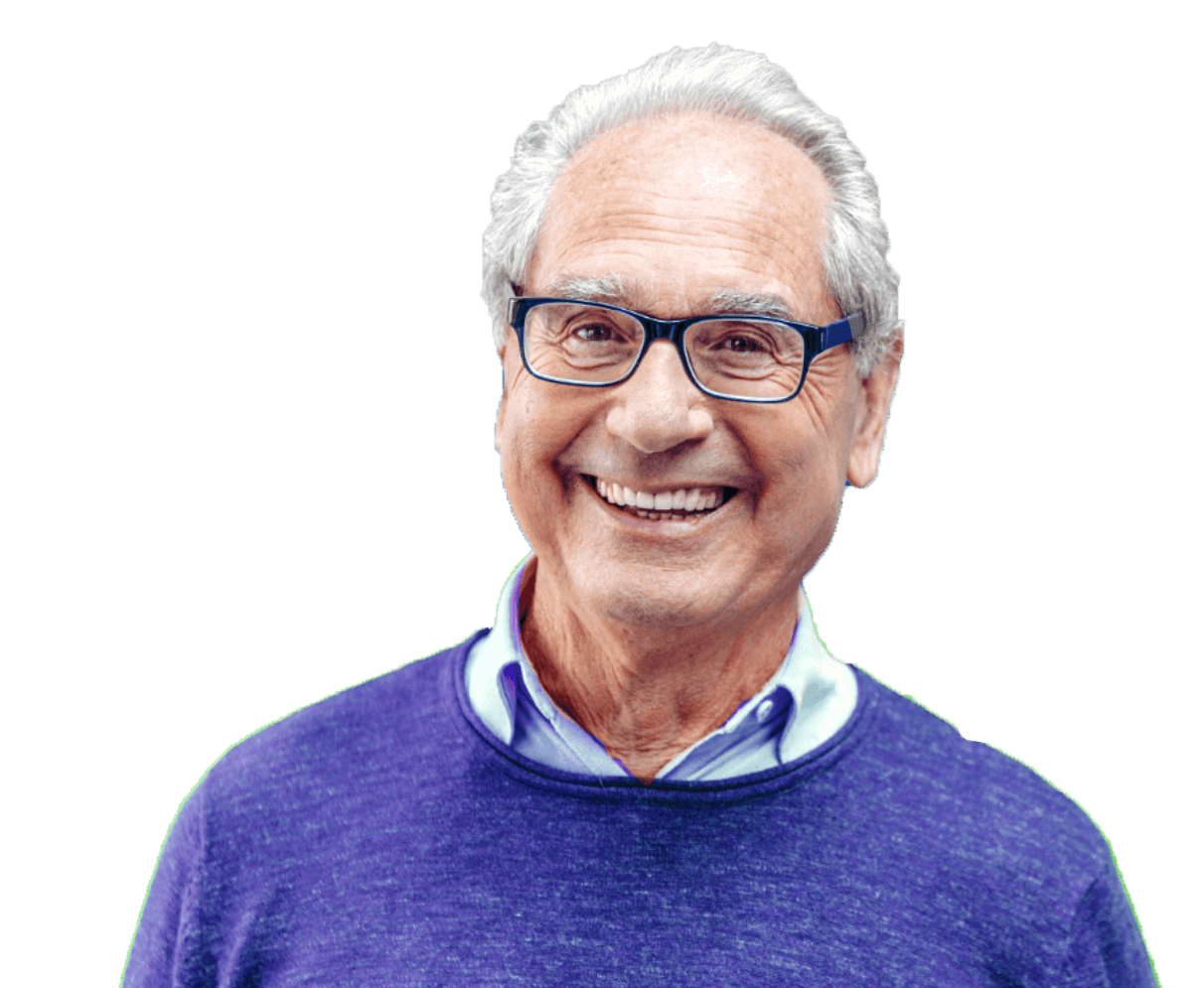
George shares how family history and regular PSA testing helped detect his prostate cancer early, even though he felt healthy and had no symptoms. After a biopsy revealed aggressive Gleason 9 disease, he underwent surgery, followed by additional treatment when pathology showed lymph node involvement and recurrence. With guidance from a trusted oncology team, he chose ADT, radiation, and ongoing monitoring, and credits exercise, gratitude, and strong support from his wife, family, and friends for helping him stay positive through treatment.
My name's George White. Grew up in Kentucky. Been living in California since I was 22. I'm 62 now, so coming up on 40 years. I'm the youngest of six kids. My older brother was diagnosed, I don't know, 2001, 2002. So I knew about that. I knew about PSA testing, read articles and newspapers about biopsies and false positives. So I knew a lot about it. And I had other family members. I got three cousins that have had prostate cancer. So I started getting my PSA checked when I was, I think, 48, 50, something like that.
And it was good. 0.4, 0.6, 0.8. This is every year. And then it was 1.2, then it was 1.9. And then it jumped up to 4.3. My primary care physician referred me to a urologist. He did the digital exam, said, "I think I feel something there." Then he did a biopsy, came back, said it was Gleason 9. He said, "Your prostate is not your friend." I remember that. And because I was like, "Well, there's other options. There's ultrasound. There's radiation." He's like, "No, your Gleason 9 has got to come out. " So he referred me to a surgeon at USC, had a radical prostatectomy at USC. Felt pretty great after surgery.
They said to get moving, keep walking. So within a week, I was walking three miles, and then my doctor friend said, "Yeah, you better dial that back. You don't want to pop a suture or something." The pathology report came back and that was difficult. It was stage 4A. They removed 19 lymph nodes. They found cancer in four of them. And that was a real gut punch.
So went to a friend who's a retired urologist. That oncologist had said, "Yeah, this is a standard treatment. Don't bother getting a second opinion." And I just didn't like his bedside manner at all. So my urologist friend said, "Yeah, that was standard treatment 25 years ago. You're going to City of Hope."
So I went to City of Hope, met with Dr. Dorff, and the way she laid things out, I was like, "This is somebody I could work with." She said, "Let's hold off on radiation. Let's get a PSME PET scan." They found two nodules, which at first I was like, "That kind of sucks." But then I also thought, well, we knew my PSA was still elevated after my prostatectomy. So we know there's something there. At least we found it. I'd rather know where it's at than have it and can't find it.
She started me on ADT. I had Firmagon injections monthly, abiraterone, four big, huge horse pills. They're huge. I grew up in Kentucky. I've actually handled horse pills before. So anyway, and then I did radiation. I did 25 treatments of the whole prostate bed, and then they did 12 treatments just on those two nodules. Let's see, when did I have a PSME PET scan? I guess it was probably a year after I started treatment. It was gone. My PSA has been undetectable for almost three years.
It's starting to come back now. So we're going to look at different options. I'm getting a scan on Tuesday, and then I've got a TeleMed with Dr. Dorff on the 10th. So if there's something we can find, we can zap it. I might do radiation, might do ADT, might do both. We'll see what the scan says. So that's kind of where I'm at. Yeah, so I don't have any kids, but my wife and I, it was very difficult. It's like, cancer, that happens to other people.
It doesn't happen to me. I take care of myself. I eat right. I do everything right. I work out. So it was really difficult. I should have taken my wife with me to the urologist appointment. I told her, "Yeah, I'm good. I'm going to be okay. It's only 4.3." I just did had my second colonoscopy. Clean is a whistle. Totally fine. And then he goes, "You've got cancer." And so I didn't call her on my way home. So she knew that it was not good because I always call her. I travel a lot. I travel to Fresno and Bakersfield, all over the place. I always call her on my way back.
So she knew there was something going on. I saw her in the garage and I told her it's cancer and we both cried and hugged. And then it's like we went for a walk and it's like, okay, we're going to figure something out. There are resources. We're here in Los Angeles. We're not stuck somewhere without resources. We've got all these cancer centers. There's UC Irvine, there's UCLA, there's USC.
There's lots of experts around. So we just kind of said, "All right, this is the next challenge we face." And we've been through other things. This was probably the biggest, but we said we're going to do it. So she's had a tougher time with it than I have. I think that is overall in my treatment, she's had a tougher time dealing with it than I have. So at first she was a little bit alarmed, like lots of people would be, but my oncologist and her nurse practitioner were really encouraging. They’re like, “Yeah, it’s really small. It’s coming back, but it’s growing slowly. There’s lots of options.”
In Texas, you would say, "This is not my first rodeo." In Kentucky, you would say, "This is not my first goat roping." So I've been through it before. The two options she's looking at right now are radiation and ADT. If it's ADT, it's only six months, not two years. I can totally do that. If it's radiation, I dealt with that once and if I got to deal with it again, I deal with it again. So I got to pick my music. So I'd always just rock out to some Led Zeppelin and ZZ Top and that seemed to make it more fun. So whatever I got to do, I'll do it.
I think there's a strong analogy with dealing with cancer and training for a marathon. It's mostly mental. You just got to get your head right. For me, I worked on my gratitude practice, ran, lifted weights, walked a lot. We got dogs. So if you got dogs, you got to walk them. We've got big dogs. So that helps. Friends. I've had the most awesome friends reach out to me. Family, I have a ton of cousins. I've got my wife's family. So when you start thinking about all those good things you have, that really helps. And I think I'm just kind of naturally a positive person.
I'm not saying I haven't had my tough days or my bad days, which you're going to get, but I just show up every day and do what I got to do. So all the things you face in treatment, okay, so it's bone loss, it's muscle loss, muscle mass, it's depression, it's fatigue, it's sleeping. Guess what? Exercise, I wouldn't say it fixes all those things, but it addresses all those things.
I think that's why I didn't have such a bad time during my ADT is because I just ran, lifted weights. It helps your attitude. I don't know if any of y'all have ever had the endorphin buzz, but that makes everything better. And I'm not saying I get it after every run, but when you have that endorphin buzz, just everything seems right in the world and it helps you deal with whatever you have to deal with. So I would say of all the side effects of ADT, exercise addresses at all.