

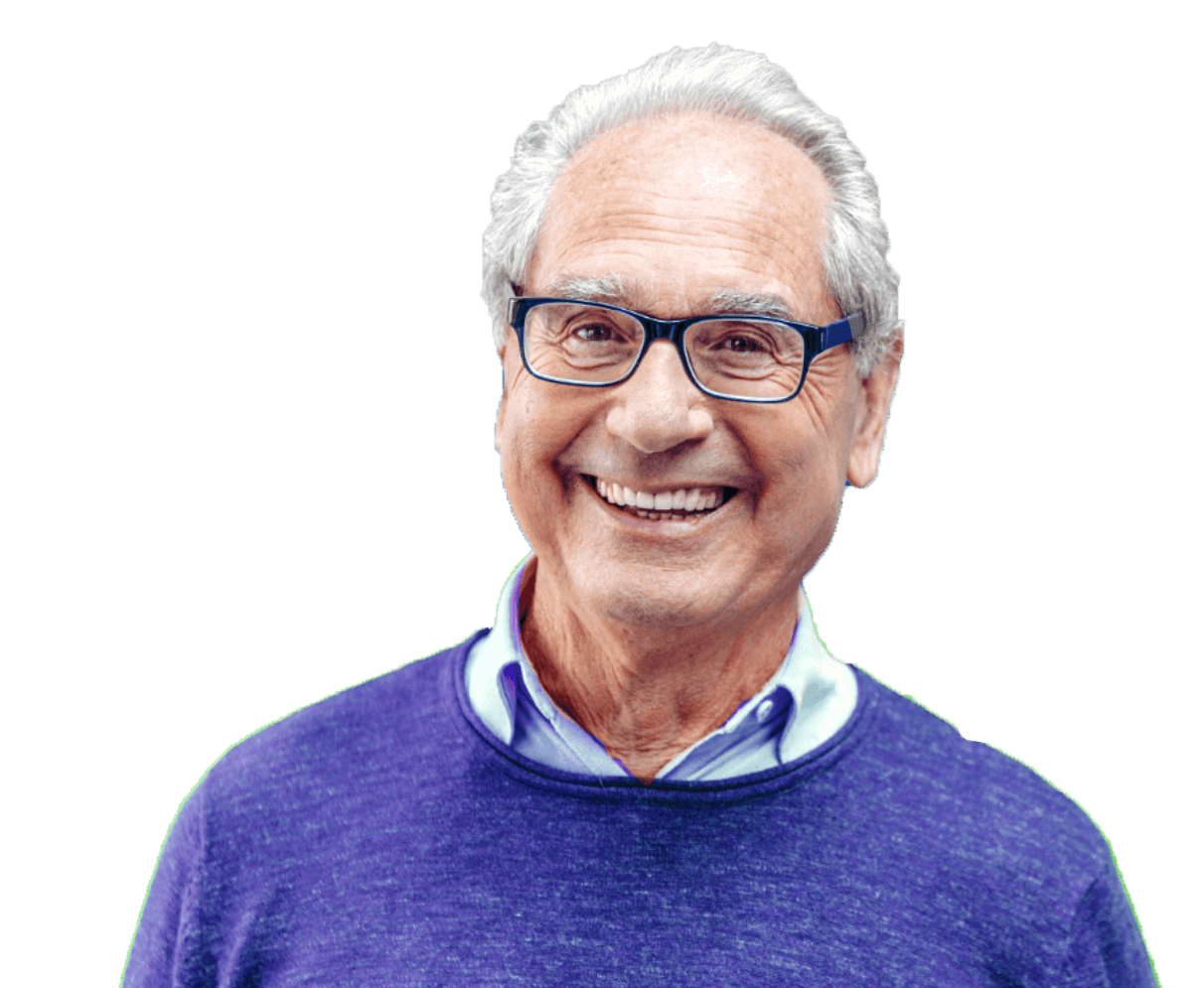
In this powerful patient story, Gregory shares how an unexpected diagnosis at a young age led him to shift from fear to purpose, emphasizing the importance of early detection, self-advocacy, and knowing your family history. Through faith, lifestyle changes, and a commitment to helping others, he highlights how mental, physical, and spiritual health can play a critical role in navigating prostate cancer and inspiring others to take action.
My name is Gregory Jacob Jr. I am married. I have been married for 26 years. I have four wonderful kids and four granddaughters, and we live in Maynard, Texas, and I work as a educator. So I teach business information management, and I teach yearbook to 8th graders.
So, I was at a routine physical, and my doctor was about to give me a clean bill of health. As she was leaving out the door, opening the door, she turned around and said, "Is there anything else?" In my mind, I knew what that anything else was. I paused for a second and I said, "Yes." I said, "My wife wanted me to tell you about some urination issues I'm having after sex."
And so, she turned around and said, "Well, how long has that been happening?" And I said, "It's been a while now." And I was like, "My urine stream is not strong. It's pretty weak." And she came in and she said, "Okay, well let's do a rectal exam." And so I was like, "Okay." And so, she told me to get in a position and she did a rectal exam, and she found that my prostate was enlarged.
And after many tests and medications that she gave me, she referred me to a urologist. And the urologist did some of his own tests and his own exams. And he was assuring me that it's more than likely not cancer because of my age. I was 41 at the time, and I didn't have a history, or I thought I didn't have a history of prostate cancer. And so, when he, after the biopsy, me and my wife went in and he talked with us.
We went back in and he told me I had prostate cancer. And I was like, "Wow." So everything just paused. I looked over to my wife and she was just crying. And so, I knew I had to be strong in that time.
So, I held her hand and just looked at her and told her it would be all right. But, after hearing that, I was laser-focused on his next words. And I was like, "Could you please finish?" And he paused for a minute and he said, "Greg, you'll die from something else way before prostate cancer can kill you." And so that gave me a little relief.
But he also told me that it was likely not prostate cancer, as well. So in my mind, I'm still going through all of these different scenarios of what's going to happen. Am I going to be this person that's going to succumb to this cancer?
And so, it was a tough pill to swallow, but I didn't want to have a victim's mindset. So, I prayed and in that moment asked God to just give me the strength. And so, eventually, I went from a pivot from punishment. Why is this me? So I pivoted from that and went to a pivot of purpose. God has given me an opportunity right now to do something that's far greater than what I was doing.
And even though it's attached with prostate cancer, as long as God is with me, I'm able to overcome whatever is coming my way now. And my focus immediately went to my son, my nephew, and other young men that I know, and how can I help them to not have this happen to them, or to prevent it for as long as possible by doing the right things for their bodies and stuff.
So, my doctor was very thorough, and so he gave me all of the information I needed. So one of the things that was like a no-brainer for me was that my prostate was 90% covered with the cancer. And so, at that time, the options were very limited. It was a wait and see. I couldn't get, like if it was a piece of my prostate, I couldn't get a piece of it cut off. That wasn't an option because it was 90%.
And so, chemotherapy and stuff like that, he said it wouldn't be real helpful at the stage I was in. And so, that's why early detection is key because my options were limited. And so, it was just, hey, either wait and see or take it out. So, it was very easy for me to decide to get it out, get it out.
Emotional swings are real, are real. The ups and downs of dealing with not having a prostate, which, you never think about in your everyday life of how important it is. So it was, after I got my catheter out and the doctor was like, "Hey, you're good. You can go to some treatments and some exercises and do different things to get back on your feet."
In the beginning, it was very good. I didn't notice any difference. I didn't really notice any difference. It was just normal.
But after about one or two months, my body realized that something was missing. And so, at that time, I started to stress and probably I would say a depression because of sexual performance, not being able to hold my bladder. When we traveling, it's always my kids who have to stop and go use the bathroom. But now it's me, the one that has to constantly use the bathroom because just of having a weak bladder from my prostate being gone.
And so, my PSA, my PSA, they started to elevate, as well. So it went from a zero to a 0.01, and now I'm at a 0.04. And so at a 0.2, at a 0.28, they're saying that they need to go back in and do radiation to get rid of all of the cancer cells.
And so, that made me think, I thought it was gone. So, I decided to go all in on my alkaline vegan nutrition. So I'm a vegan, and so I've added the alkaline vegan part to it to help my body fight as much as possible, not only with the mental, but the physical, allow myself to get every option possible to prevent it from coming back or prevent my PSA from growing higher.
So, one of the things that I did was create a process, a healing regimen of prayer, exercise, and nutrition. And my spiritual life really grounded me. It helped me to focus on not just me and what I'm going through, but my purpose for going through this.
So waking up early in the morning before the hustle and bustle and spending time with God really was life-changing for me. It enabled me to overcome the depression and to begin to look at it as a broader sign of God wants me to do more than what I'm doing right now.
And so, every side effect became a signal, not just a struggle, but a signal for me to transform what I'm going through. I've written a book called Tried & Approved: Faith. Fight. Heal. And in the book, it just outlines my journey during my prostate cancer walk.
And so, it gives men and women, the women who love them, an opportunity to see what happens before, during, and after diagnosis, and what kind of tools you could put in place to possibly prevent it, possibly to heal it, and to give you an opportunity to have more options if you catch it early enough.
But my nutrition is very key. I have had great results from just eating right, and putting the right stuff in my body, and not allowing my taste buds to guide me, but allowing my body and what my body needs to guide my decisions on my food intake.
My prayer life has been instrumental in everything. And so, prayer, nutrition, and exercise has been the key to my success, to me feeling good, feeling better about myself, giving myself the best opportunity to have that legacy, that outreach, that longevity that we all look for.
And I always say, I don't want to be, I don't want something to take me out of this life that I could control. And so, my eating habits and making the right decisions and right choices have helped me to feel good.
And so in this book, I've outlined every step. And so it's also a workbook, as well, because it can hold you accountable. You have to do some things in there to push yourself to become the person that you desire to be, the person that your family needs, the person that your wife, your children needs you to be.
And so if we are strong mentally, physically, and spiritually, then we could be our best selves for the people in our lives.
Doctors would always ask me if I had a family history of cancer, and my answer was, no, because I had no idea the amount of men that had prostate cancer in my family until I reached out to my aunts and uncles. Because my dad died when I was young, and so I didn't have him to look at.
And so, when I talked with my aunts, when I talked to my aunt, my nanny, she gave me a whole list of men in our families that had prostate cancer. And I was just blown away. Like, how can I fight something that I don't know that it's in my family? How can I talk to my doctors? How can I advocate for myself if I don't know that I have a history of it?
Because when I did mention a urine stream to doctors in the past, it was like, "Well, it's probably nothing. You're probably dehydrated," this or that. It was, "As far as doing testing for something like that, you're way too young to do that."
And so they brushed it off and I was like, okay. I brushed it off, too, because I had no idea that I had that family history. But now that I know, I'm able to talk to my son, talk to my nephews, talk to my godchildren about prostate cancer and early prevention, and how to advocate for yourself when you go to the doctor. When you have education or understanding of what is in your family history, then you could better prepare for your family future.
And so, early detection is crucial. It is key.
I feel that prostate cancer can be preventable if we know what we're up against in the beginning. And that I was talking to a friend of mine's about her kids. Her husband died and he had prostate cancer, and he was maybe a year younger than me. And they didn't share that with me until my story came out. They didn't share that he had prostate cancer. But now that she is sharing with me, she's telling me the struggles that he had.
And so, if we have early detection and if we know that we have a history of it, then maybe we could start at a younger age of educating the younger generation of the do's and don'ts of treating your body right. Because you have this inside of you, it doesn't mean it has to come out. It doesn't mean it has to blossom inside of you. It could stay inside of you and not grow if we doing the things to prevent it.
So, the resources, I use the internet. Early on, so it started in church, just a desire to be healthier. Fasting was a part of my upbringing in church. And so, through my history of fasting, eating only vegetables and nuts and legumes, beans, those kinds of things, that gave me a foundation of what I could do to heal myself, to heal myself of all the processed foods, to help my body fight different diseases better.
The other resource that helped me was my physician assistant at my doctor's office. He gave me a couple of books to read. He said, "When you have this steady increase of PSAs that it normally just continues to go up until we have to go in and radiate."
And so at that time, I was like, "I don't want radiation. I'll get it if I need to, but if I could prevent myself from having it, I will."
So, my walk right now with those resources of eating right, my faith, and not being in a depressed state is really helping my mental. And if my mental's good, then my spirit is good. And if those two things are good, my body is going to follow along and fight the fight that it needs to fight because I'm feeding it right and I'm feeding my spirit.
And so, resources that I wish I had was I wish I knew about the Prostate Cancer Foundation. I've seen the Emmett Smith commercial, but I didn't put two and two together that it was prostate cancer. I thought it was more of just men getting older and not being able to hold their bladders and stuff.
But now that I've done the research, and I know that there's tons of information that you guys have, it would be so helpful if, and I am committed to spreading the word, it would be so helpful if we could have some posters about the prostate cancer foundations in barbershops, in churches, in different walks of life, not just during prostate cancer month, but that is a yearly thing.
That's something that we could use, especially in my community. Because we are twice as likely to die from prostate cancer because we don't get checked. The two... Well, the guy, my cousin-in-law who died with it, he did know about it, but it was way too late. They had to, he didn't have any options. He just had to get the surgery and get everything removed. And that put him in a depressive state and everything just went downhill for him. And he didn't live too much longer after that.
And so, if we have resources, if we have more awareness, that would be huge. And so, one of the things that I'm determined to do is to get resources, find out the websites so I could share it on my platform so I could share it with the churches and just everybody.
Who, in my community, it's the barbershop and church. And so getting the word out into those areas will be very helpful. And having the resources, not just my story, but the facts behind prostate cancer, knowing what you could do, how to advocate for yourself.
So, those are the things that are resources that I wish I knew ahead of time. But now that I do know about it, I'm on it.
My number one superpower is empathy. And so, I am always wanting to help people and to serve people. And so, I had to really take a step back from saying, yes, I could help you. Yes, I could do this. And yes, I could do that.
And I had to start using the word, no. And so I had to take a step back because I'm a high school referee, football and basketball. I am a teacher. I used to do Lyft and all of those different things just to make ends meet. And so, I had to really step back and take my health more seriously than I did in the past.
Because me, I can go and go and go because I had a purpose of being a provider for my family, for my wife and my kids, and my grandkids now.
And so, I really had to push back against the grind and slow down and eat right, drink more water, which is crucial to this fight, and give myself the space that I need to get rest. It takes a lot for me to sit down and to rest.
And so, since I've been diagnosed, I've been really working on trying to get seven hours of sleep a night. And so, I really had to take a step back from my normal day-to-day grind. And it has really been a help to me to say no, and to delegate when I need to and not to put it all on myself. And so my wife and my family has been instrumental in giving me the space that I need to heal properly.
You're not alone. Take a deep breath. Ground yourself in the situation and the environment and the statement that you just heard. Ground yourself in it. Build yourself a team that's supportive of you, that love you, and that will give you the time and the space that you need to heal.
Lean into your faith because without my faith, I would not be the person who I am today. Learn the facts. Lean into what your doctor's telling you. Lean into what your body is telling you. Ask questions.
Create a healing routine. If you get up, if you wake up in the morning before everybody else gets up, create a routine that is just you, God. And if you're reading something, if you're doing yoga, doing exercise, create a routine that is just centered around you, where you don't have to think about anything else or anybody, but just you and your time with God and with yourself.
I would tell them to remember that this is not the end. This is the beginning of a new chapter in your life, a chapter that you are going to write with courage and determination and desire.
And it's not just going to be about you, but others who are going to see your walk. You want to model a good walk for them. So just know that it's not the end. And that with the right facts, faith, and determination, you can overcome this dreadful disease.
I just want to thank the Prostate Cancer Foundation for this space for me to share my story. It's not just about survival, it's about thriving. It's not just about surviving, it's about stewardship, the stewardship of the story that God gave me.
And so, given the book that I've written, Tried & Approved: Faith. Fight. Heal, it's not just about cancer, either. It's about what happens when fate meets the fire inside of a person when they have been diagnosed with something. It's about the healing that becomes a movement. If you or somebody else that you love is walking through this journey, this book is for you and for them. It is a guide and a testimony, and a tool for legacy.
Let's build systems of hope together, and let's walk together and share our experiences. Thank you.
This video was produced with the generous support of AstraZeneca Pharmaceuticals