

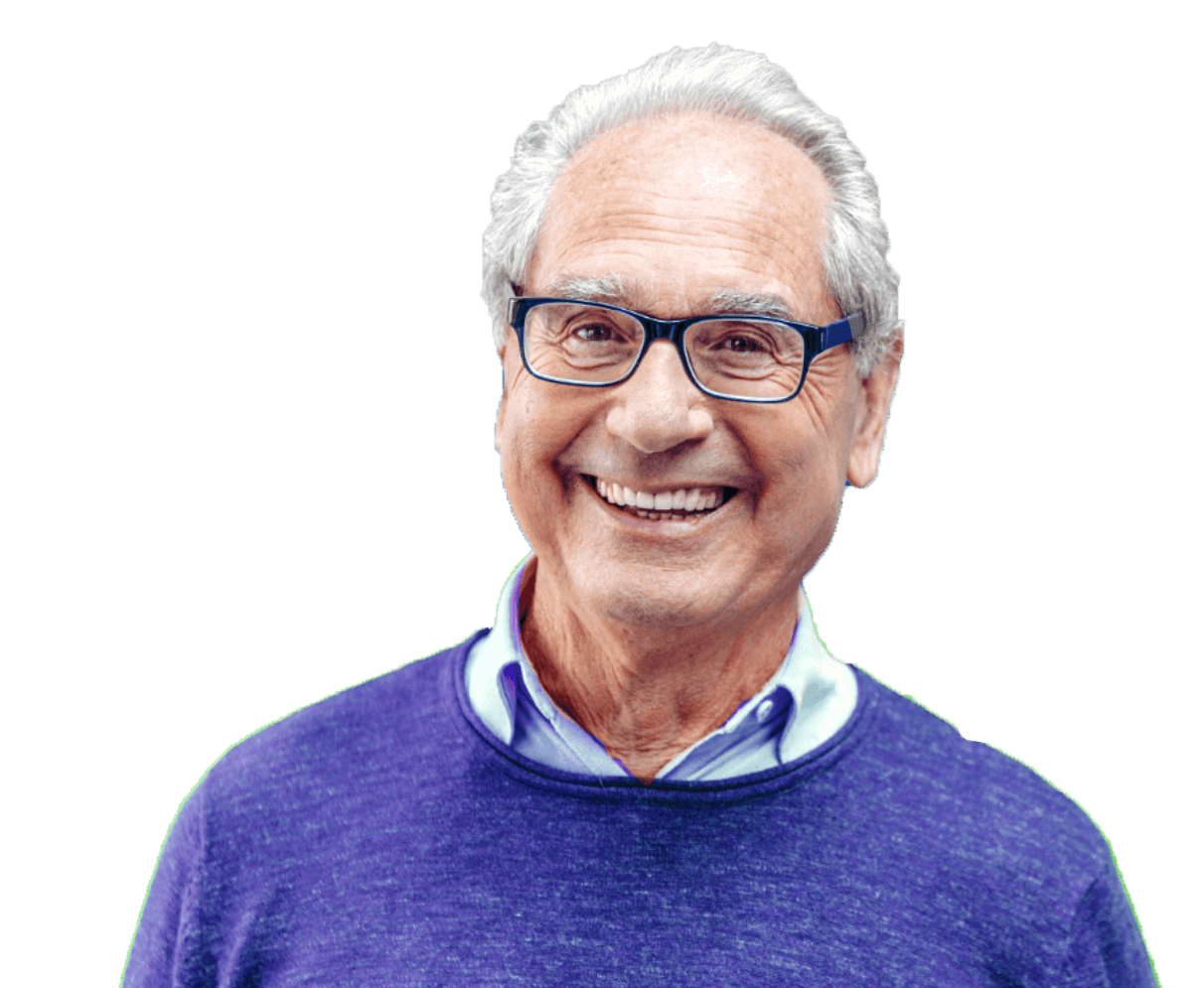
Paul shares how an unexpected PSA blood test led to the discovery of high-risk prostate cancer despite having no symptoms. Through support from his family and care team, he pursued surgery and participated in a clinical trial that combined pre-surgical therapy and treatment, ultimately leading to an undetectable PSA and a strong recovery. His story highlights early detection, support, and hope.
My name is Paul Wormser. I'm a 70-year-old. I grew up in New York on Long Island in a family with two brothers, a mom and a dad. I met my wife as I was starting my second degree in college and she was starting her first back in 1977. We got married six years later. We've raised two daughters. We now have a grandchild. Professionally, I'm an engineer. Some people call me an engi-nerd.
My story's a little bit different perhaps from others. I had skipped the typical annual blood test, which is a wonderful indicator of whether someone is at risk for prostate cancer, for a few years. In a visit with my general practitioner, she commented that I had not had a blood test, and so she said, "Let's take a blood test right now."
So we took the blood test, and a few days later, my doctor called me up to say, "We need to do it again," because the scores were surprising. I had no symptoms whatsoever. I knew that a PSA test, that is the test in the blood that helps you identify this, was important, but I was, like many men, oblivious to paying attention, despite the fact that my father had prostate cancer. He didn't die from it, but he had it. That was a real eye-opener.
With the result of the blood test, my doctor referred me to another doctor who specializes in this particular area of medicine, Dr. Patel, at the university system. I met with Dr. Patel and he did a digital exam. The digital exam said, yes, my prostate was enlarged. And with that and a high PSA reading, we determined that it was important to do a biopsy.
So I went through the biopsy procedure, which I can say 14 samples were taken. It was an absolutely pain-free, easy experience, and so if anybody has any concerns about a biopsy, I would say at least in my case, the biopsy was very straightforward. The biopsy gave the proof, in addition to the PSA score, that I had cancer. I had high Gleason scores, and that was the definitive diagnosis.
I was lucky. My younger daughter's husband's mother was a director of nursing here at the university. When we told her I had a problem, she made some suggestions about what to do, and those suggestions included interviewing two of the leading physicians in the area, one on the radiation side and one on the surgery side. My wife and I jointly interviewed Dr. Rose for radiation and Dr. Kane for surgery, and we learned about so many things, about so many different approaches, so many therapies, so many indications of what's high risk and what's low risk. Those two interviews were incredibly valuable.
We, meaning my wife and I, made the decision, because it's a family choice. It is a collective decision between doctors, family members. We made the decision to do surgery, just get rid of it as best we can. That resulted in going forward with Dr. Kane as the surgeon, but there was a magic moment, a magic moment during the interview when Dr. Kane mentioned that there was a clinical trial underway to take a look at some new therapies to be done pre and post-surgery. That clinical trial was run by Dr. McKay. So I thought this was a pretty cool idea.
I applied to the trial and I was accepted into the trial. I may have been the last person on campus to get in. That trial postponed the surgery by six months. That may be a concern to some people, but to me, it was important to go through the trial. The trial put me on drug therapy to kill cancer cells. The way that I describe it is it put a force field around my prostate so that if food got there, it couldn't get in, and it also reduced my testosterone, or put it the other way, the food, so that there wasn't much food to begin with. So if there's not much food to begin with and it can't get in, maybe the cancer cells will starve.
I did that for six months along with some physical therapy that I'll talk about, and the result was the prostate shrank, shrank, shrank to the point where it was only about 61% of its size six months later. That means necrosis or dead cancer cells. That's a good outcome. With that therapy that went for six months, I was also able to do pre-surgical physical therapy for pelvic floor muscles, or what you and I might now call Kegels.
I went to a doctor here who is a doctor of physical therapy specializing in pelvic floor muscles, and she taught me how to do Kegels. She also taught me how to strengthen my core and how to get ready for surgery and how to get ready afterwards. So she was, again, what I call one of the rockstars here. So Dr. Kane, Dr. McKay, Dr. Tam, absolute rockstars who helped me get ready for the surgery.
The surgery itself was, to me, interesting and so straightforward from my perspective. I rolled into the hospital at 5:30 in the morning on August 29, 2022, and I met with Dr. Kane beforehand. The next thing I knew, I was being rolled into the operating room, and the next thing I knew I was waking up. This was a robotic surgery. There were five points where the robot penetrated my abdomen and the surgery took place.
To me, the robotic surgery is just an incredible advance in technology, and the way that I look at it, and I'm not a physician, the way that I look at it is it can't be better than this. Dr. Kane is a magician who's really learned how to do this over the years, and he's incredibly skilled.
So I got lucky I had a fantastic surgery, and I went home that same day at 7:00 at night. Amazing, amazing. About a week later, I had to have the catheter removed, because after the surgery, you have a catheter. There again, it's one of those things where if you read online about a biopsy, it's scary, if you read online about having a catheter removed, it's scary. The biopsy was easy. The catheter remover, it was definitely like, oh, my God, what's going to happen? No problem whatsoever. Absolutely easy. Again, a credit to the doctors and the nurses who have done these procedures and make them absolutely routine, pain-free, easy to go through.
I followed on with the clinical trial. I'm still meeting on a quarterly basis. Today, I'm happy to say that my PSA, which again is a great indicator, remains undetectable. I think the trial continues for another 18 months or so. I'm not exactly sure because my oncology care team will never stop. The objective of the trial was to try a combination of approved drugs, but never used in this particular application.
One of these drugs was Lupron, which tends to now be used for some kinds of treatments for prostate cancer. The other one was either real or a placebo. I don't know. I don't think I'm ever going to learn, but it was apalutamide if it was real. These two drugs, again, one of them reduces testosterone and one of them gives me the force field, and that combination, and I would say that in addition to the physical therapy before the surgery, would be what I would say as a non-doctor is a fabulous standard of care.
My family and I, we are very lucky we are all good friends. Yes, every family has some dysfunction, guilty, but generally speaking, we have a very, very tight family. We consult each other on major things, we inform each other on major things. When this came up, the C word came into the conversation. I think in the first day, we were all nervous and scared because we didn't know about the options.
We didn't know about the opportunities for care. We didn't know this amazing care team right here. As we got to know the options, as we got to know the care team, and as I spoke to people who had gone through prostate cancer, a lot of that fear started to melt away and we immediately started to take care of me, because at the same time as I was diagnosed with the prostate cancer through that early detection of the blood test, I found out I had a few other things going on, including diabetes.
So with the diabetes diagnosis, I right away started a strength training program. Turns out that's great for prostate cancer. And I had a big change in diet. Turns out that's great for prostate cancer. These steps along the way, meeting the physicians, learning more about it, talking to the family, and having incredible support from my two daughters and my wife, we were all in this together, and we remain in this together as we go forward.
I don't know all of the criteria that are used to determine who gets in and who doesn't, but I think I was regarded as high cancer, good surgical risk, the right age, and in otherwise not terrible health. Those are the factors that I imagine were considered. There may have been other factors considered. I imagine in some of the early tests that they did, they determined that I would be a good fit for the statistics that would be used to determine whether or not this combination of therapies before surgery would lead to a better outcome.
I'll say this two times: I feel fire trucking awesome, or to put it a little bit less humorously, I feel terrific. I feel terrific here, I feel terrific here. One of the issues that I think affects any man going through this, especially if the selection is to do the prostate removal, the radical prostatectomy, are there side effects? One of those side effects is incontinence, or more generally, leaking, and I don't leak. I attribute this to, again, that physical therapy that I had before surgery.
To anybody else looking at this, it does take a village, and there are a lot of people out here who are going through this, so you're not alone. There are a lot of people out here who have gone through it, and I'm just one of many. I think the statistics right now are, I think, one in eight men at some point in their lives have prostate cancer. They may not die from it because it's generally slow-moving, but that's a high number.
One in, I think, six African American men suffer from prostate cancer at some point in their lives. This is a widespread issue. The amount of research going on every day, the number of clinical trials going on and the improvements in therapies and options is just startling. And I've been one of the very, very lucky recipients of this research, and I think that it, to me, brings me hope. When I meet with my medical team, it is a joyful event. It is not sad. It is not tragic. It is joy. It is hope.
Today is the annual event, I think this is the fourth year in a row, for patient care related to prostate cancer. I was fortunate enough to go to the second year and the third year, and now this year, the fourth year. In that first event, there was a patient who came out and told his story. I cried, I laughed, I was inspired, I got hope. It was a wonderful, wonderful story. Afterwards I said, "I want to do that. I want to be someone who can get up on stage and share that this doesn't have to be any sort of a terrible tragedy." Yes, the news is terrible, but there is hope and there is success available for most of us, and I'm very lucky to do that.
I was asked if I would be willing to speak. I jumped at the opportunity, not because I love being on stage, but because I think there's a story to tell, and there's a lot of gratitude to be given, gratitude to my family, gratitude to my medical team, Dr. Kane, Dr. McKay, Dr. Tam, and all of the other doctors, nurses, clinicians, radiologists, everybody, the receptionists involved in the village that has supported me through this. And there's a lot of gratitude to be given to the other patients who go through clinical trials because we all learn, and then a lot of love and empathy to the other people that are going through this.