

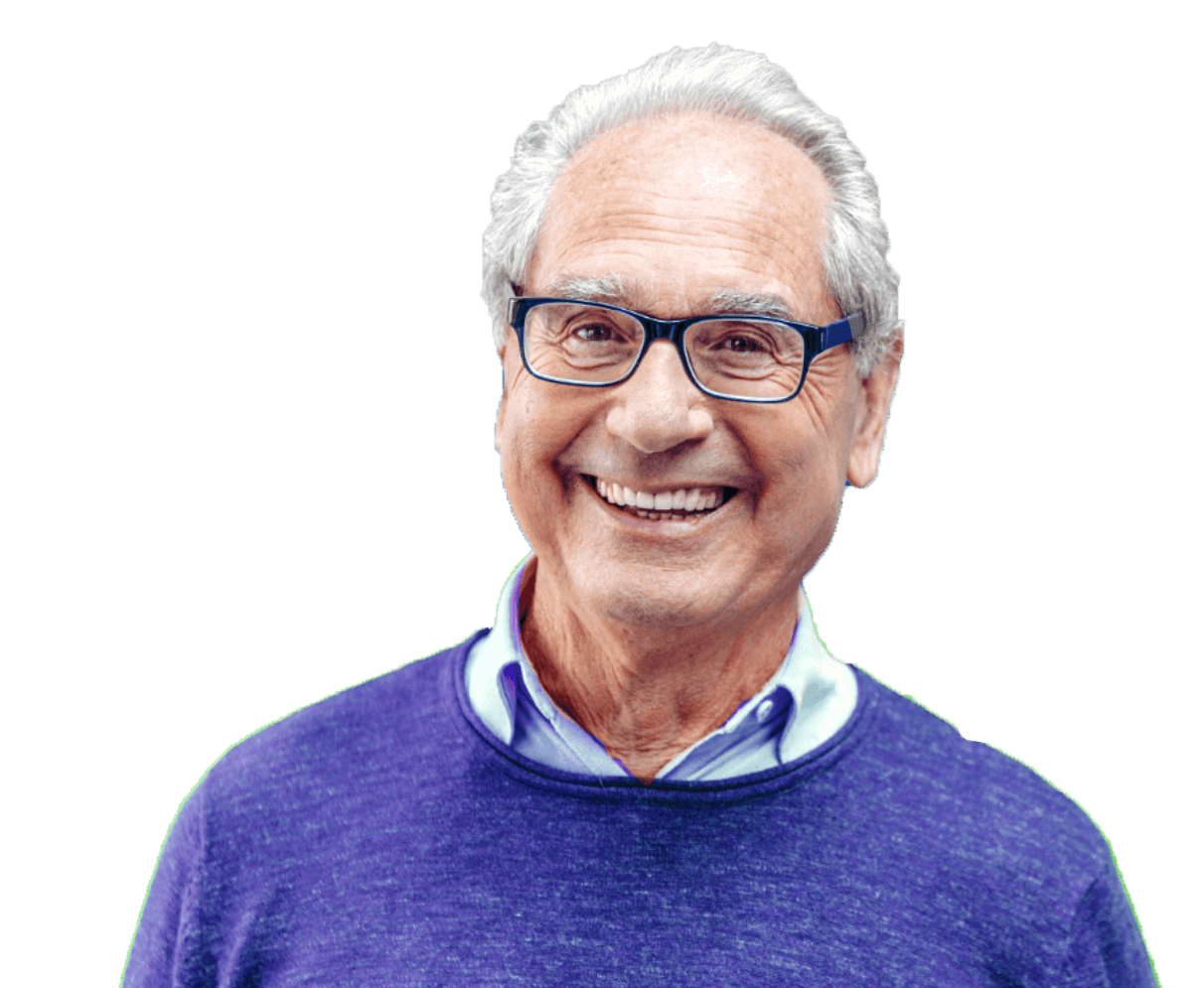
Two brothers, Vietnam Veteran Robert and Phil, share their experiences with prostate cancer, from diagnosis through treatment and recovery. They discuss PSA screening, the VA, and why both chose surgery after researching their options. They also reflect on side effects, support from family and fellow Veterans, and the importance of getting tested and treated early.
Robert Kuhn:
My name is Robert Kuhn, and I'm 73 years old, and I live in Pittsburgh, Pennsylvania. And I'm retired. I've been retired for 10 years, 10 great years. I love being retired. I retired from Sears. You remember Sears? They're long gone. But I was a repair technician to work for Sears for probably close to 40 years.
Phil Kuhn:
My name is Phil Kuhn. I am 64 years old. I live in a little town called Mars, Pennsylvania. It's about a half hour north of Pittsburgh. I am still currently employed, I'm full time at one of our local churches here, and I take care of young adult ministries and I'm in charge of all the facilities and the grounds and construction, and all that kind of stuff.
Robert Kuhn:
I'm a Vietnam veteran. I served in the Vietnam War, was in the infantry in the United States Army. And that's one thing, I think it's important to mention, that because if you're a Vietnam veteran, you were most likely exposed to Agent Orange. And if you were, and you probably were, the VA just assumes that you were, if you served in Vietnam, that your chance of having prostate cancer and many other cancers, not just prostate cancer, are greatly increased for that reason.
And the VA doesn't argue it. They just presume that you were in contact with the Agent Orange. It is poison, it's cancerous, it's terrible stuff. So that's important, I think, to stress to the veteran population. Get tested, get tested, go to the VA. They have everything you need to take care of you there.
But yeah, I only served two years. I was drafted and I got in, did my duty, did my service, and got out. And now I'm a veteran and I'm proud of it.
I was, it was about five years ago in 2020, that I was in for my regular routine, annual physical, which I am adamant, I am pretty good with every year. I don't miss that. One of the reasons is because of our family history. We have a bad family heart history, serious heart disease in our family. So they always keep checking the blood work for cholesterol and all that kind of stuff related to the heart.
And I try to stay on top of that for that reason. Well surprise, I came back, the blood work came back with a high PSA. It never was high before up until five years ago. And, all of a sudden the doctor calls me and says, "We've got to get you over to urology." I'm thinking, wow, one test, one number and you're going to panic like that.
I wasn't happy about that. But I listened to them and we ended up going to urology and I guess we'll talk a lot about that later. But yeah, the PSA screening, it's what caught it early, and I think it's extremely important to have that done.
I've been getting treatment, all my medical treatment at the VA for the last 15 years. I think it's a wonderful place. I love the VA.
Well, I made sure I had enough information. I am not sure that I was provided the information as much as I would've liked to have, from the doctors. I mean, they filled me in the best they could, I'm sure at the many appointments I've been to. But I took it upon myself to study and research and use the internet, and all the information's out there. It's just a matter of going to get it. I was honed in on getting as much information I possibly could.
And I was fortunate. My brother, Phil here, had, he already had been through this before me, and he was a great, tremendous, valuable resource of information for me. If I didn't know something or understand something or something wasn't clear to me, I know I could just get on the phone and call Phil and he would have the answers for me. So, he researched all this before I did. So I was lucky that way.
Phil Kuhn:
About a dozen years ago, I got good and sick and I landed in the emergency room, and they did some testing on me and a CAT scan, and it turned out that I had a kidney stone. And they kept me in overnight and the urologist came to see me and I said, "Hey, I have this friend that has prostate cancer and I probably should have my prostate checked." And I said, "While I'm here, we might as well do it."
So they did it right there in the hospital. They checked my prostate and it turned out they found a bump on the prostate. And from there they sent me for a biopsy. And the biopsy then revealed that I had what they called a carcinoma cancer. I believe I was 53 when I was diagnosed, and I did get regular PSA tests. And I agree with Bob, I can't stress enough. These PSA tests are that important. But my PSAs were only up just slightly, and they were increasing, but not much.
Robert Kuhn:
I investigated all the choices. I began with the active surveillance to wait and watch, and I did that for a year. And I had planned on, I was hoping that that was going to be the only treatment. I was going to stretch that out as long as I possibly could.
But I think the doctors figured out that a year may... I shouldn't go any longer with that. And so, then there was offered radiation, the seed implant radiation surgery, and they gave me all these choices, but they wouldn't tell me what to do. It was up to me. So that was a struggle. It was a tough decision.
It's a long story. I went back and forth with different doctors, but I ended up with surgery. I chose to have the radical prostate... Prostatectomy, how do you say it?
Phil Kuhn:
Prostatectomy. Prostatectomy.
Robert Kuhn:
Well, whatever. But so, I based that decision on what I felt was probably the least amount of side effects. I was hoping for the least amount of side effects. But the surgery itself is much more, it's more difficult. I think that it's more difficult than the radiation.
So, I went with the prostatectomy.
It went well. Like any surgery, I mean, you get five or six cuts into your belly and it's going to be sore, it's going to be tender, it's going to hurt. But it wasn't too bad, actually. And you're laid up for six weeks or so until you recover. So, there's a good bit to it. It's not easy. It's not easy, that's for sure.
And the catheter thing, I was scared to death of the catheter thing, and I had some problems with that. It ended up in the emergency room because of a blockage in the catheter. So I mean, there's going to be, it doesn't always go as smooth as you hope. There could be some complications, but fortunately it all turned out well.
Phil Kuhn:
Once they told me that I had carcinoma cancer, the doctors also asked me what I wanted to do. And I said, well, I didn't know because I don't know what a carcinoma cancer is. And they shared with me that a carcinoma cancer is a group of cancers. And I said, "Okay, so which one in the group do I have?" And they said, "Well, we don't know," and we will talk a little bit more about that in a minute and what we did going forward from there.
But I also went on the active surveillance program, and for a year and a half, I spent my time researching the various options that I had, like Bob said, the active surveillance, the surgery, the radiation, the radiation seeds, chemotherapy, and worst-case scenario is the hormone therapy. And so, I researched all those.
I even visited doctors and paid to do consults with various urology doctors in the area, and I interviewed multiples. And so, I really took an extra step, if you will, in deciding what to do with my treatment.
I chose radical prostatectomy, because my opinion of the available treatments was the path of least resistance. If I had the prostate removed and I ended up with prostate cancer, I still had an option for radiation treatments, and I still had an option for chemotherapy. So, if I chose the radiation 10 years ago, according to the doctors, then that would eliminate removal of the prostatectomy. So I wasn't going to jump ahead if I didn't have to. So that's why I chose to have mine removed.
Robert Kuhn:
I'm a strong proponent of the VA system. I love the VA. I get all my treatments there.
Now, I have outside, other medical insurance, so I can go anywhere I want. I'm not locked in there by any means. In fact, when I was going through the treatment options, and I did use outside doctors like Phil did, I went and got second opinions to two or three different doctors. In fact, I might've seen one or two of his doctors. He gave me their names. And that's the UPMC Medical Center here in Pittsburgh. They're huge. They're large, and the VA works with them. I think they actually partner with UPMC.
So, you're not necessarily dealing with just the VA. In my case, here in Pittsburgh, we're partnering with the UPMC and they're using the UPMC doctors. I think it was a UPMC doctor that came into the VA facility, and actually did my surgery with that huge robot. That thing was cool.
Phil Kuhn:
The Da Vinci machine.
Robert Kuhn:
The Da Vinci, yeah, da Vinci machine. I can't stress enough how much I like the VA here in Pittsburgh. You hear some scary stories about the VA in, maybe other parts of the country, I know. But that's not the case. And I know now they're partnering with Prostate Cancer Foundation too. And the VA, I mean, what a great combination, a huge prostate cancer foundation, the VA working together, hand in hand, partnership.
I mean, you got so many veterans with this. Prostate cancer I think is the most common cancer being treated at the VA right now, and has been for quite some time. Because veterans are probably twice as likely, I don't know the numbers, but much higher risk than the non-veteran population of getting prostate cancer.
So the VA actually treats a ton of these cases, and they're highly experienced, and they have all the data, all the research, they have all the equipment, they have great facilities. So I strongly, I'm a strong proponent of the VA.
Phil Kuhn:
The couple, primary side effects are incontinence, stress incontinence, and then erectile dysfunction, would be the main ones. And there's a whole long story about how you avoid some of those problems.
But I typically just deal with like a stress incontinence is the only side effect that I had from the procedure. I know other men have had all three, or maybe some erectile dysfunction. I just have to deal with stress incontinence.
Well, there's a couple ways you can deal with it. I think the best way to deal with it is right at the beginning when you're interviewing your doctors and preparing for surgery, if that's the route you're going to go, you have to make sure that you are seeing a seasoned, veteran doctor, that knows what they're doing. Because it makes all the difference in the world as to your outcomes when they're all done. That's number one. That's probably the big one.
And like myself, I did have stress incontinence side effects, and there are some medications out there that you can take that help that. Obviously there's things like pads and the pull-up underwears, and things like that that you can use. So those are things that you have to deal with.
Robert Kuhn:
I think that because I chose surgery, I think one of the reasons I chose surgery was because I thought it would be the least amount of side effects that I had to deal with. So, I feel very fortunate and very lucky that I have minimal side effects.
The worst for me is frequency and urgency, as far as urination goes. I don't go very far. I don't go places where I know there's not a bathroom. So if I want to go out, that's one of the first things I have to do is look for a bathroom, make sure I know where it's at, because when I got to go, I got to go. You can't wait. And if you do, then you're going to have, then I'm going to have leakage. And I know that, and it's not something you want to do in public.
Phil Kuhn:
Right.
Robert Kuhn:
But I've been very fortunate with minimal side effects. But that's the main one for me.
What I'd like to add to it is what Phil taught me in the beginning. He says, do your Kegel, I think that's what they're called.
Phil Kuhn:
Kegel.
Robert Kuhn:
Kegel exercises. He says, "Start now, before your surgery," he says, "Because," he says, "it's going to make a difference." And he was right. And this is just, I learned from my brother, the VA, I don't remember them mentioning that, they probably should have. But he says, "I don't know how to do Kegel exercise." He says, "Well, look, here's what my doctor told me." He says, "If you start to urinate, you stop in the middle and hold it. And if you let it go, then stop in the middle and hold it. And you do that three times every time you got to urinate."
And I never forgot that. And Phil taught me that, and I did that ever since I found out about it. And it was months before I had the surgery. And I give credit to that one exercise and that one valuable piece of information, for not having as much incontinence as what a lot of guys might have.
We're the only males left living in our family. So the next generation is grandchildren, the males. Phil has one son, and my grandsons, they're still too young. I may have that conversation with them someday. If not, I'm sure their parents will. But Phil, he probably has a little more to say about that than I do.
Phil Kuhn:
Yeah, so my son, when he was in his early twenties, he walked through the whole thing with us, so he's well aware of the implications. And we did lose a very good friend, which he was very acquainted with, to prostate cancer because the friend did not seek any treatment, did not seek any testing. And so, he, be blunt about it, my son watched him die, and he watched me live. So he's very aware of where he's at in life. He would be 33 now. And yeah, I tell him to make sure he's regularly tested and he knows that, yeah,
My employment is such that I have lots of flexibility. I'm free to come and go as I please, take time off if as I need. And they're very good about that. So, from a recovery perspective, from the procedure, I was able to take the time I needed off work. And then when I did go back, which I went back too quickly, I went back within 10 days of my surgery, and that was a mistake. A month should be minimum.
But I did go back to work in 10 days, and I went back part-time, and they were very accommodating to my recovery process. And you just take it easy and you keep going, and you build your strength up, and you do a little bit more each day. And after some months go by, I was back in the full swing of things.
Robert Kuhn:
I didn't have to worry about missing work or going to work or missing a paycheck. And all these things are very, very important to a lot of people that are still working. So, I'm very fortunate as far as that goes.
Phil and I are both do-it-yourselfers around the house. We do all the maintenance, all the building, everything ourselves. And so, that was a hard part for me. I had to hire a lawn service to come in for the summer to cut, to mow the grass, mow the lawn. And if there was a plumbing problem or something came up, it killed me to call a plumber. I'm just not like that, you know. Phil and I are do-it-yourself.
So that was really, and that's minor. I don't even know why I mentioned it, but that was the worst of it for me.
Phil Kuhn:
I was diagnosed with prostate cancer, I wasn't sick. I didn't hurt, I wasn't in pain. I could work twelve-hour days. We went on vacations and they told me I had cancer. And to me it was like being told I had a hangnail because I had no pain, I had no issues, I had no side effects.
So from the mental aspect, it didn't affect me at all. And when I went for the surgery and I took the prostate out, I just had to recover. And then, in 10 days I went back to work and life just went on.
But there's this 5K race for the cure for leukemia, that the family gets together and we go for a walk. And, what my sister bought us all matching tee shirts, so that we all went for the walk on the 5K together. And when they handed me my tee shirt, I turned over and on the back of it said "Cancer Survivor" on it. And that struck me pretty hard because I never really viewed myself as a cancer survivor. I just had a problem that I had to fix and that was it. Life went on.
So, that's when it hit me that I actually had cancer and that I did survive it. And so, I mean, sooner or later the reality is going to hit everyone that this is what they have, once diagnosed. And that's when it hit for me. But after that, that was short-lived. I went right back to life.
Robert Kuhn:
Yeah, mine was a little different than Phil's. I would have to say there was a mental health issue. Just being informed that you have cancer. I mean that messes with your head. At least it did for me.
And one of the things I worried about, not only for myself, but I have my wife and three daughters and grandchildren. And so that was a serious worry concern for me that, am I going to be okay? If not, that's okay, but is my family going to be okay? And these are things that worried me, and that I think those are some sort of mental health issues.
That was the big thing for me. And I notified my family immediately. In fact, my wife may have been on the call with me when I was informed. I'm not sure. I don't remember. But, there was no delays in informing everybody, not only just my immediate family, but Phil and my two sisters and my daughters. Everybody knew right away immediately.
It's not something we kept secret. We shared everything. Not just the first day, not just the announcement or a discovery that you have cancer, but we kept everybody informed all through the process. Every step of the way, we're in this together is the way we felt.
I reached out to several of my army buddies, and I found out, out of the six men that I served with, and I contacted and I let them know, I got prostate cancer. They says, well, welcome to the prostate club. He says three of them had it, two of them had a different type of cancer, and one of them I think was okay. So that's a pretty high rate of incidence among veterans.
But they were great. They supported me. The one veteran, I didn't actually serve with him, but we got to be good friends. And he told me, "I want updated on this every step of the way." He says, "At least twice a week," he calls it a sit rep. You got to call, give me a sit rep. I said, that's a situation report. "So keep me up to date on this." He says, "We'll get through this."
So my veteran friends were very supportive. My family, everybody, there's no point in hiding it, and there's no point in trying to deal with it all by yourself, because I think that's a bad decision.
Phil Kuhn:
When I was sent for biopsy, I did inform the family via an email that I was going to have a biopsy done. And I said, "I think it's just a formality." I said, "I'll let you guys know the results, but I don't expect anything at all to come from it that I am young, I'm strong, I'm healthy, I'm not sick. And I'll let you know what they say." And I did. They told me I had cancer. So you just never know. And that's my point. You got to let people know, and, because bad things can happen and people need to be informed.
Robert Kuhn:
Well, in my case, I had a higher risk being a veteran, and a second higher risk being a family member who has cancer. So I call it a double whammy. It's very high risk. So if you have any of these high risk, any male, whether they have high risk or not, but especially if you have a high risk, just get tested. You just got to get tested, because it's a simple, easy thing to do. It's part of the routine blood test. I think it's crazy not to, I strongly encourage everybody, all men to get tested.
Phil Kuhn:
For me, I tell people to get checked, and if you find out you have cancer, get treated. I've seen what happens to guys that don't get treated, and the treatment is much preferable over not getting treated. And so, I've had firsthand experience with both. Get checked, get treated.
Robert Kuhn:
And the cure rates are reasonably high. So I mean, it's getting better and better with the cure rates. I mean, it's treatable now much more than it was years and years ago. So yeah, get treated, get tested, do what you have to do to take care of yourself.
Bill and I have talked over the years a lot about this amongst ourselves, with each other, and it's great to have the opportunity to share this out with a larger audience, our experiences.
And our goal here, the reason we're doing this is we just want to help you guys out there. If our stories help you, then it was all worthwhile being here today with you.
Phil Kuhn:
Absolutely.
Robert Kuhn:
We appreciate the opportunity. Thank you.
This video was produced with the generous support of AstraZeneca Pharmaceuticals