

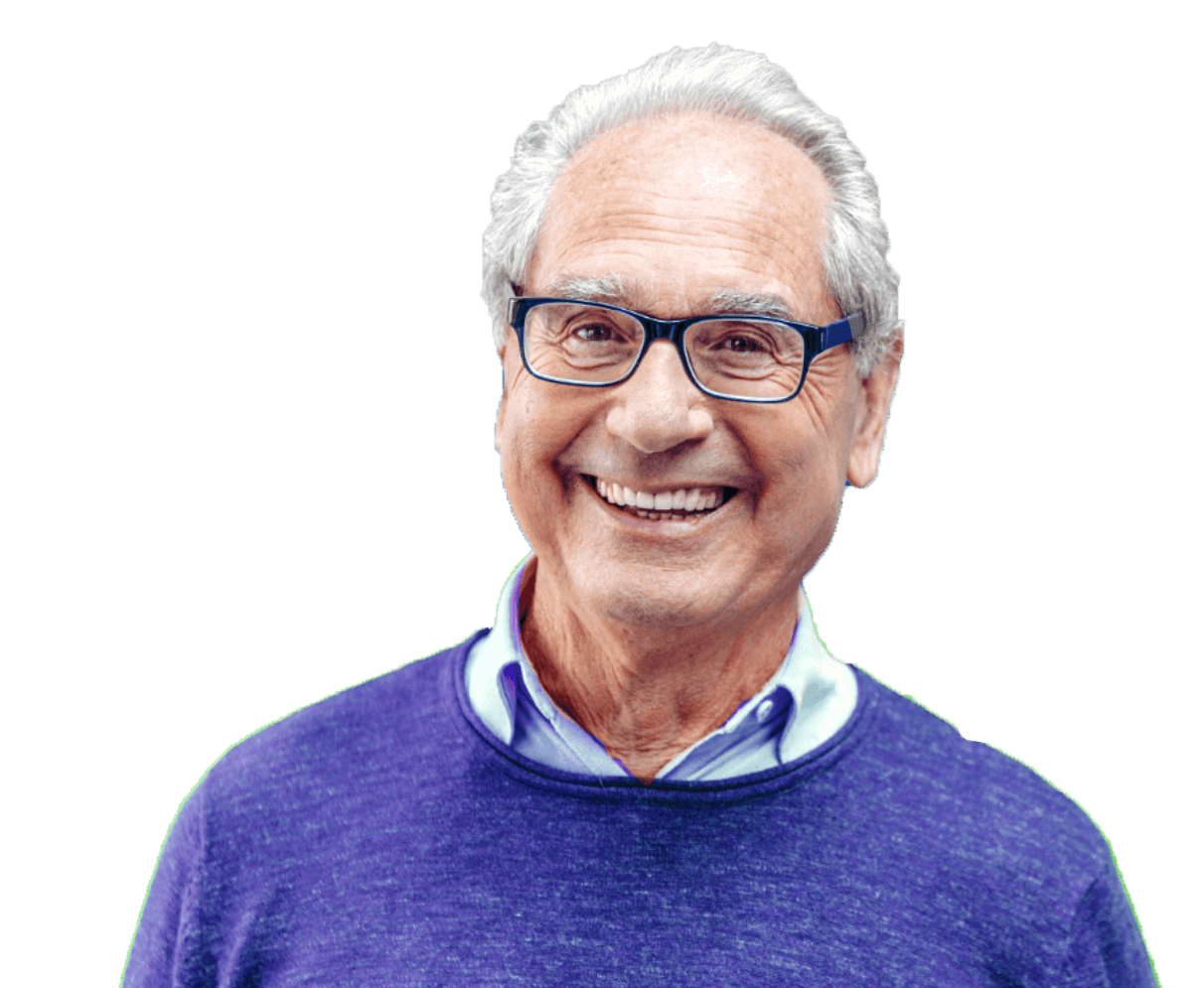
Ronald shares his prostate cancer journey, highlighting the emotional toll of navigating the experience without prior knowledge or a community to openly discuss it. While supported by his wife and son, he emphasizes the need for greater awareness while also calling for greater support, education, and advocacy - particularly within the Black community - to help others navigate the physical and emotional realities of life after treatment.
My name is Ronald Woods and I am 63-years-old. I am presently living in Media, Pennsylvania. Every year I try to get a complete physical around my birthday. And in the year of 2021, I got it a little later. My birthday's in July, so I decided to go. It's around August or September. I went to my primary doctor and part of the yearly routine is to get a prostate check. And because at that point I was 58-years-old.
And so he did the intrusion test. And so he said it felt a little funny. I had some type of ridges or some kind of nodules in there that he could not. He didn't want to say it was not prostate cancer. So he said that I will set you up with an appointment to see a urologist. So I went to urologist at Penn and they did a ... Well, they scheduled me to have a biopsy and also to have an MRI.
So I got the biopsy and they found that there were some cancer cells on one side of my scrotum. And then he shared with me that, "Yeah, it's cancer and that it's a slow growing cancer." But when I heard cancer, it just rocked my world because I've never ... I knew of people that died from cancer, so that's all I knew that it was a death sentence. So it just took me in a spiral direction going downward and very depressing.
Remember, this is all new for me. I have no point of reference. I have no one to run anything by, so I'm relying on these urologists to walk me through this process. So the first thing is like, this is really slow. What you can do is just do active surveillance. And I was like, cool, that seems like a safe thing just to just live life, get these biopsies so often, MRIs so often.
And that was the game plan because that was safe for me until I got a biopsy. And then the urologist at Penn was like, "Hey, it's 4.7 now, but there's some growth that's happening in there and we can't really identify where the growth is coming. And so you may want to consider some other options," because one of the things he said to me that still resonates with me is that, "Some people can live with the idea of having cancer cells in their body and can operate, but some people emotionally, they just can't handle it."
And I started thinking about it more and I was like, I just want this out of me. And so, 'cause I was getting scared and I was getting nervous about it. And so I went and told them that I wanted it removed. And so I set the appointment up, did the EKG and all that stuff, and then I got really scared because I never had an operation. And the way they were saying that it's intrusive, you're going to have to stay overnight and all that stuff.
And I got really, really scared and I never followed up on the appointment. And so my wife was like, you know, her friend knows the head urologist at Thomas Jefferson, "Why don't you go and talk to him?" And so I went to him and they were like, "You know what, it's really slow growing and we can do active surveillance." And so I was doing active surveillance for a while, doing biopsies, going through that whole process.
Then they took a biopsy and saw that there was more cells on the right side of my scrotum. And then they went and did the PSA, jumped up a 4-7 to 12 something. And so he was like, "Listen, this is the issue. We can't really tell where it may be hiding somewhere, always saying it is on one side of your scrotum. And so we can continue to do biopsies and observations, but you really need to consider doing something about this because we don't want it to metastasize." And so I kind of dragged my feet because I was still scared.
And so I finally decided because it jumped from 12 to 22 point something. I mean, I have it in my records. And so he was like, "Even though ..." And then I went and got a PET scan, I got CAT scan, I got MRI, I got a biopsy. And so it was showing that it was still there, but it was like it could be hiding somewhere else because even though it's slow, it's jumping up. And all we're seeing in the biopsy from these snippets are these cancerous cells. So he's like, "We really need to make a decision on this."
So I talked to my wife and my son and he was like, "Dad, you probably need to go ahead and get this prostatectomy. I'd rather you have it out of you than trying to deal with this day in and day out," 'cause they could see the emotional trauma that I was going through. So that was the process how I got to the actual removal.
So one of the things that really I got really depressed and sad about is that, and a point of reference, one of the problems in Black culture is that Black men don't talk to Black men about things like this. And so I had no one to run this. I didn't even know who to talk to because I didn't even know anyone has gone through it to say, "Hey, I'm dealing with prostate cancer. How do I deal with this?" Because not only were I dealing with the idea of having cancer, but emotionally I was thinking like, "Man, this sure is really bad and I don't know if I'm going to survive from his." All kinds of thoughts started creeping up in my head.
And so if I would've had at least a group of men, then I was like, "What happened in this first phase? How does it feel during the operation or what does it look like when you come out of it?" The urologist gives you this piece of paper, "These are the things that may occur. This might, is going to happen after surgery," and all that. I didn't even know this whole idea of ED would be occurring. And it just threw me into a spiral. I mean, it really hurt me to the point that I was crying.
I didn't share with my family because it's emotional trauma that you go through as a man and you trying to be strong for them. You don't want them to think that you're giving up and all that type of stuff. So yeah, if I'd have had a support group or some men that I could call on or maybe a church group that I could get support and like, "Hey, you can make this. I went through it. These are the phases that you go through. These are the emotions, this is how it affects your family, this is how it affect your son."
What I told my son is that he's blessed that now he has a point of reference. When my father died, I didn't know what he died from. I don't know if it was from prostate cancer. When I go to the hospital and they asked me your family background, I can't give them that, but now I can give that to my son and to other men that, listen, these are some of the symptoms, these are some of the signs.
"Son look out for this, you need to get tested for to let your doctor know your father has prostate cancer and all that stuff that comes along with it." So I've been communicating with him and sharing with him, and I would love to share that with other men so that they don't go through this process by themselves.
I didn't know the whole gambit of what prostate surgery brings on. All I knew was that they were going to take out my prostate so that the cancer would not metastasize or go outside. So I thought that was a safe place and that would be okay. But then once I came out, I had this thing called... I had a bag that I had. I never knew I was going to be going home. First of all, I didn't even understand the whole idea of what a thing that they stick in your penis to drain. That was devastating. I've never had none of this stuff.
No one told me how that's going to feel and what you're going to experience emotionally going through all that. And then to have it removed and not knowing that you're going to be dealing with incontinence on a level that ... I mean, it was so embarrassing for me and so hurtful that I had to wear a diaper. And I can't begin to tell you the emotional trauma that made me feel as a man having to put on just so that you don't peel yourself. Just going to church and having to pray or to share a word or get excited.
You can't even worship because you're afraid that if you jump or get excited, as I'm praising the Lord that you might pee all on yourself so you sit there in quiet silence because I mean, you just don't want to pee on yourself. So I would go to the bathroom before church and then rush after service to run over there and knowing that I have to change the pad.
This was all just new to me. No one ever told me this is the type of stuff that you have to deal with. And then from there to realize that now I have an ED that you can't even be affectionate with your wife or whatever. And it was just so devastating. It was so hurtful that you couldn't even share with anyone because, I mean, out of pride, you don't want to share. And then secondly, I mean, you don't know how to share something like that because you don't hear it from nobody else.
So you don't have those type of venues or I didn't even have that type of group that I can go to and like, "Hey, man, this is what I'm feeling. I am so sad. I'm hurt. I don't know how to deal with this. I have nobody can trust that I can just be naked and honest with." And so as much as I want to share with my wife, I mean, she's bearing her burdens too, because now she's looking at me and she's going through this trauma too, seeing her husband, it was just a whole lot. I can't even begin to tell you just how you just have to deal with this and sometimes in just silent loneliness and going through this trauma all by yourself.
And I think that's the stigma that is affecting Black men, and that's why they don't share. I mean, you're going to tell that you got ED, you can't get it up, you can't even please your wife. It's just not something that you share, at least where I come from. And so you just keep it to yourself. And so that's what I dealt with afterward. That was the trauma. And even today, I decided to go and get an implant because it was messing with me so much. I didn't feel like a man anymore because I could not ... And so I got the implant, and so I'm working through that now.
I think for my wife, I tried to bring her along because she kept saying to me, "I need to know how you feel and what's going on 'cause this is affecting me just as much as you." And so I had purposed in my heart to bring her along. When I went to urologists, if she couldn't make there, I would FaceTime her and she had an opportunity ask the urologist what was going on with me, what the next steps, so she was fully involved. And even with when it came to surgery, she had an opportunity to sit down and talk with my urologist, and he explained some of the things that would occur.
And then she decided to follow this group of women that deal with men that have prostate cancer. So she went on research and how the women cope with their husbands going through this trauma. And so I would suggest to any man that's going through this to make sure that you make them a partner in this, because silently they're on the side going through their own trauma, watching their man go through this trauma, and it affects them.
It hurts them to the point they want to jump in and help. But we sometimes become so prideful that we got this, we don't want them to be involved, we don't want them to feel the pain that we're feeling, so we shut them out and isolate ourselves and go through this by ourselves. And I just want to say this, I'm grateful that I had her because if I was just by myself, I don't know what I would've did because it was just so scary because I didn't know.
And so yeah, I think it's important that you have your partner, your team in this, and it may not physically be affecting her, but emotionally it's affecting her. My son has been my coach along the way that when you went to the doctor saying, "How's the test going?" And I sat down with her, I was like, "Listen, son, it's very important for you too, that you are 35 at this point, but you still need to let the doctor know at every point that you go to get your physical 'Hey, my dad had prostate cancer,' so that they can start observing you and looking for signs. And you may have to get prostate exams a little earlier than I did so that they can catch it at an early stage."
I think I wish I'd had someone to tell me, "You need to get prostate exams," that's just not talked about, but I have this great opportunity to be able to communicate with my son on that level." And he's well aware of it, the effects of it, he's seen me come through and come out of it. So that's a really great thing for him to be aware. So my desire, one day I was sitting home and reading about prostate cancer and implants and all that stuff. And I mean, the Lord spoke to me as clear as day that, "You need to be an advocate and you need to share this with other people and you need to ..." I just believe that he doesn't take you through stuff just for yourself.
And what I went through, the trauma, the hurt, the pain, somebody else needs to hear that. And I reached out right away, emailed you guys, said, "Can I be an advocate? Can I share this with others?" Because I just think that's my mental now, and I need to pick that up and run with it. And I'm looking for a platform, I'm looking for an opportunity to do that, because there's a lot of people walking around with this cancer in them and they're not aware and we need to make them self-aware of it. But not only that, not to just make them aware, but to walk with them through the process. That's what I want to do. I want to walk with people because I had no one to walk with me, but now that I know and I know some of the things that can trigger trauma, I want to help them through that process.
It's my story. I can't tell nothing different. I've went through it and I know the pain of it and I still bear some of the pain of it now when I think about it. So I just want to be honest and share with people that sometimes they don't get all of this when they're sitting down with a urologist, the stuff after that you have to deal with. I think that's so important that somebody speaks truth to that and so that they're well aware.
It's a day to day, moment by moment, hour by hour progression. I mean, you don't have prostate cancer, I have a prostatectomy, and now you're out of it. It's still stuff that you're still dealing with. It's still trauma that you're still working through. It's still stuff that I'm working through with my wife. It's just being open and honest about how I feel about it.
One of the things she said to me is that not only is it a great thing for you to share with others, but you also need someone that you can share with too, and that's an ongoing thing that you need to do. It's one thing to pour yourself out, but you need somebody to pour into you too, because their stage is way after prostate removing all that that you're going to be dealing with down the road. So I take that to heart.
And so I think one of the great things, if there's a team of advocates that can get together and share their stories with each other, encourage one another, and then go out and encourage those that are going through this process, I think that would be a great idea because I think it's almost like discipleship in the church. I mean, you get disciple, you disciple someone else or they disciple someone else and you just allow that to continue to grow. So that's how I see it. I just did a PSA, four PSAs and I'm still 0, 0.1, so yes, yeah.
And that was just, I had the prostatectomy. Actually, like I told them, I was celebrating last month, October the 21st, I went in for surgery, came out the 22nd, and so it's one year and a couple of weeks being very prostate removed.
It's real. And so I think people want to see authenticity and they want to see the realness of people experiences, because when they go through it's going to be real to them and they want something that, "Hey, I can relate to that. I heard that. I felt that from that person," and that's why I don't shy from talking about the trauma and how much it hurt and how much it still hurts when I look back at it. And it still bring tears in my eyes because I didn't have anyone to help me through that. I couldn't lean on anyone, so that's why.
This interview was produced with the generous support of AstraZeneca Pharmaceuticals